

Blog
Most parents arrive at this page tired, confused, and quietly questioning themselves. You may have already asked for help — clearly and in good faith — and been met with delay, dismissal, or endless process. You may be wondering whether you’re overreacting, misunderstanding the system, or asking for too much. You’re not!
Recent posts
-

They’re calling parent complaints a crisis. That’s how you know they’re working.
A UK survey hands us a rare, candid look at how institutions think about the families who complain — and what that sentiment means for parents in BC. A law firm in England…
-

They tried everything, then they chose to do nothing
“He went from zero to sixty.” “There was no warning.” “He just flipped his lid for no reason.” Schools say these things so often that they can start to sound like facts about…
-
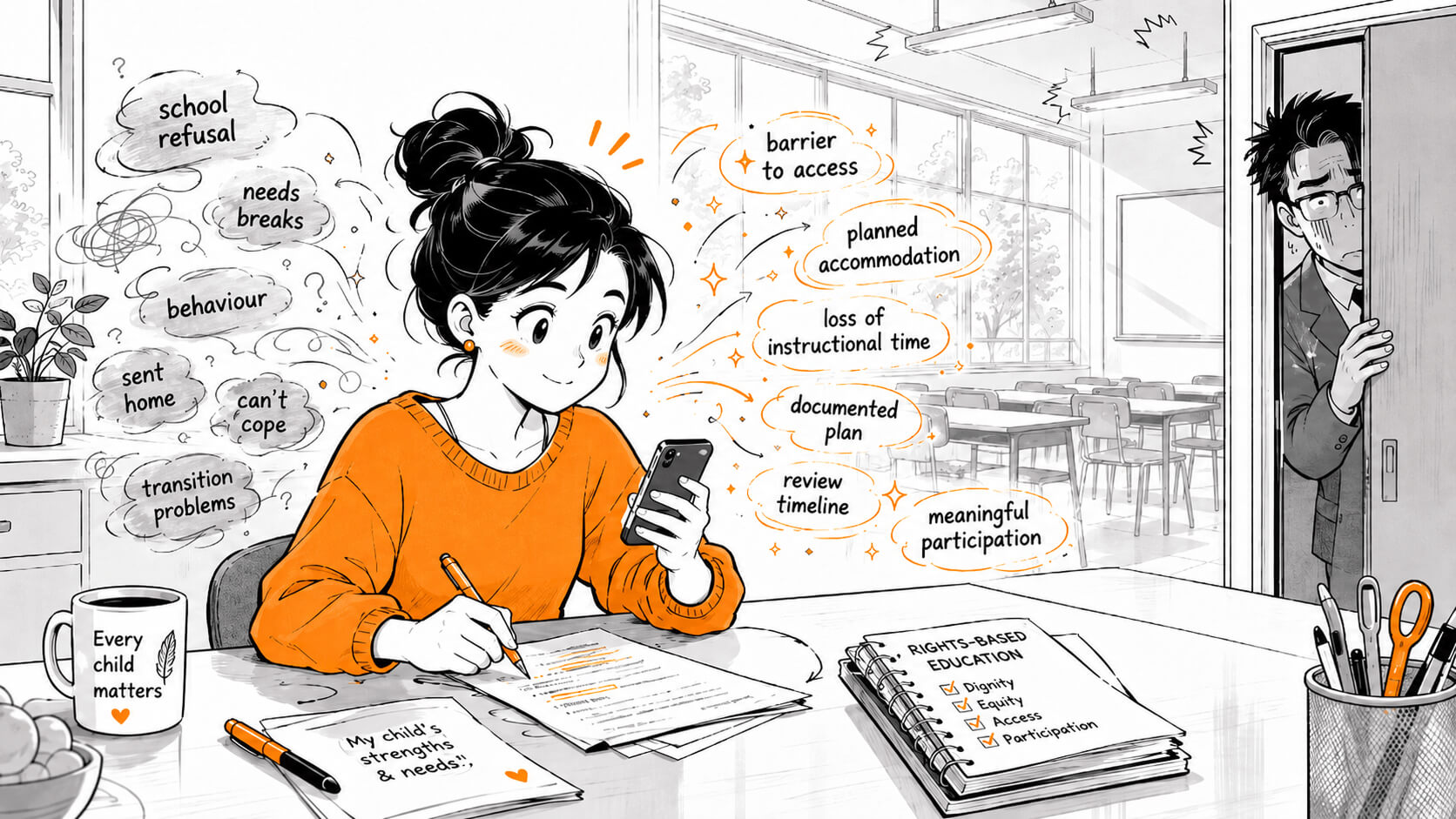
Rights-based language for school advocacy
Families are often told to explain school concerns in softer, simpler, or more “collaborative” language. But when a disabled child is losing access to education, vague wording can make it easier for the…
-
When school keeps sending your child home early
When early pickups become routine, the issue is access. Your child needs support to stay at school, not blame shifted onto the family.
-
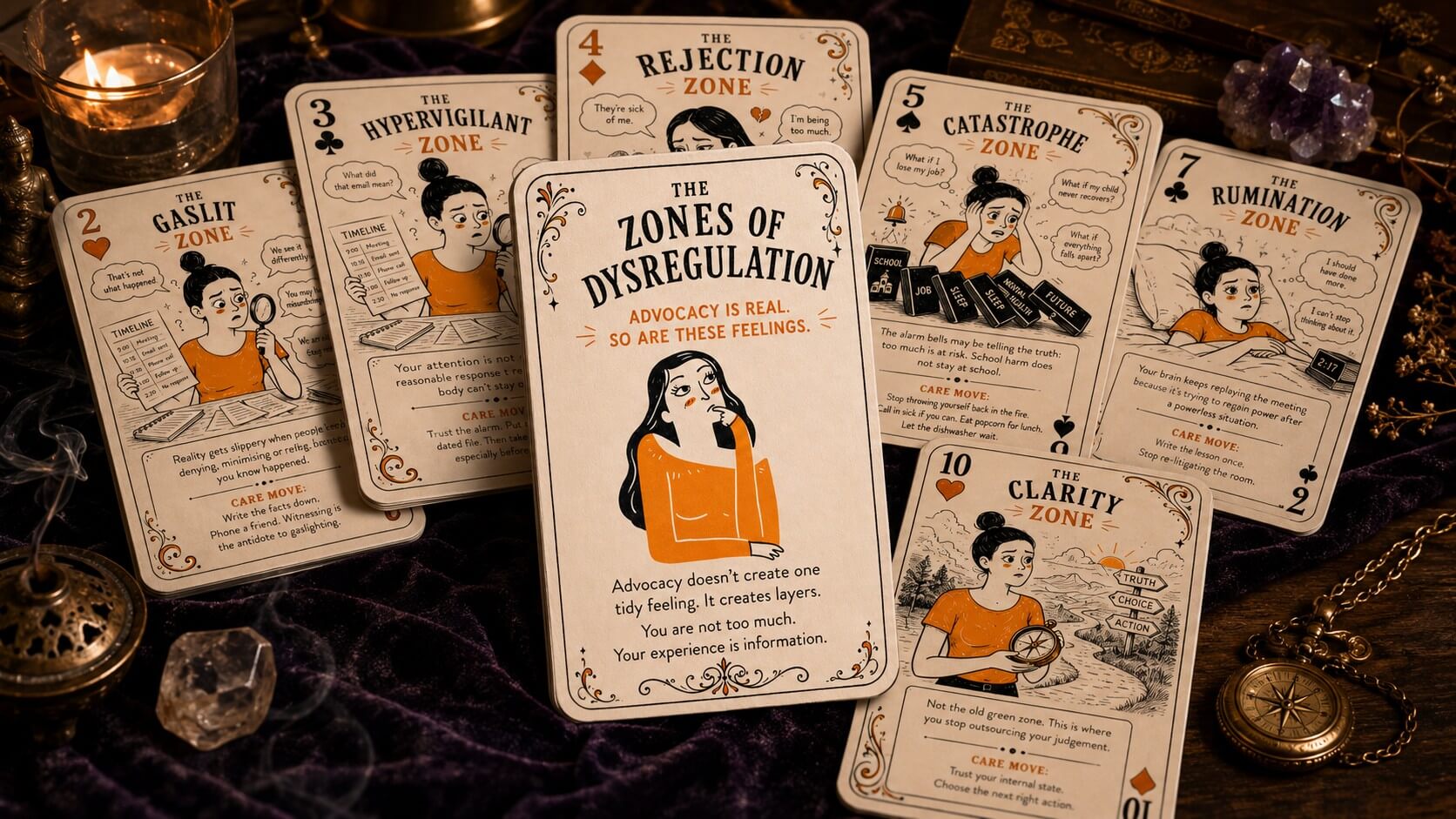
The Zones of Dysregulation: a framework for parents who advocate
Advocacy produces emotional states that deserve recognition. They are not the calm, collaborative, friendly emotions schools demand. The Zones of Dysregulation can help you recognise the gap.
-

Gender identity discrimination in BC schools
BC schools must respect and affirm each student’s gender identity and gender expression. This is not just a nice idea. It is part of the law. In BC, the Human Rights Code protects…
-
When your worst experience already has a name
A reflection on why naming school harms matters, how isolation is produced by institutions, and how shared language can help families recognise patterns, document complaints, and find common ground.
-

Pruning the garden: on structural inequity in schools
The building manager had answers. The plants were thriving — and that, in a system built on structural inequity, was exactly the problem.
-

When “be positive” becomes another demand: toxic positivity and disabled children
When schools insist that disabled children stay positive, distress can become something children are expected to hide rather than something adults are expected to understand.
-

Spring IEP reviews: what to ask before September
Spring IEP reviews help families ask what was implemented, what evidence shows progress, and what must be ready before September.
-
Non-performativity: when saying the right thing replaces doing the right thing
Sara Ahmed uses the idea of non-performativity to describe statements that do not bring into effect what they name. In her work on anti-racism and diversity, Ahmed shows how institutions can say “we are committed…
-

Welcome to the bad mother’s club
There is a version of “good parenting” that school systems often reward. It looks calm. Cooperative. Grateful. Patient. It attends the meetings, reads the reports, accepts the explanations, and tries one more strategy.…
-

The help that feels like access
There is a moment when the school finally says yes. After weeks or months of being told your child cannot be in class, after early pickups, reduced days, and vague promises of planning…
-

They looked like they were swimming
At the pool, some children get a lifejacket and nobody argues. Some get water wings or a caregiver hovers. Everyone can see the support. No one calls the child dependent for wearing it.…
-

AI and school complaints: who is it really helping?
Somewhere in British Columbia right now, a parent is pasting three months of grief into ChatGPT and asking it to make the grief sound reasonable. Somewhere in the same province, a district administrator…
-

Structural problems across district complaint processes
If you read one school district’s complaint process, it can seem reasonable. Start with the teacher. Escalate to the principal. Work your way up. Try to resolve things collaboratively. Keep communication respectful. These…
-
When the process becomes the problem in SD40
If you are already struggling—watching your child suffer at school, trying to hold together work, home, and advocacy—the idea of a clear complaint process can feel like relief. There is a pathway. There…
-
Humiliation harm: the invisible injury in schools
Many school harms leave no visible mark; they are social injuries, moments when a child’s distress becomes a spectacle and their dignity becomes collateral damage. For disabled students, particularly autistic children, those with…
-

The school is ignoring my child’s IEP
If your child’s IEP lists supports that are not actually happening, the problem is not just paperwork. It may be an access issue. An IEP is not the accommodation itself. It is the…
-
My child is being excluded from class: room clears and partial schedules
If your child is regularly sent home early, placed on a shortened day, or repeatedly left alone in a classroom while other children are moved out, they are being excluded from education. Schools…