
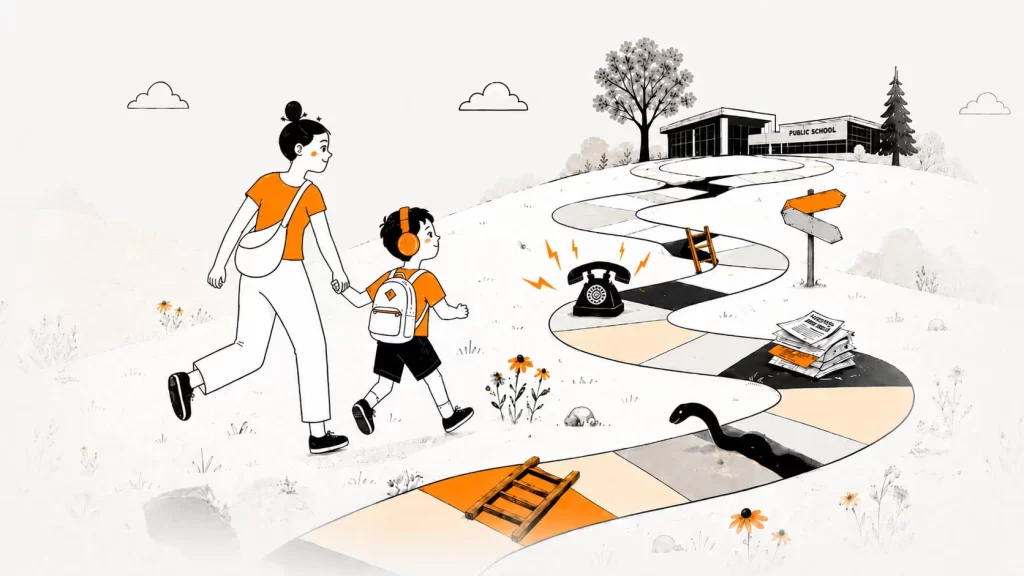
Making a complaint in BC public schools
You can do everything “right” and still watch your child lose access to school. K12 Complaints exists for that moment — helping BC families name what is happening, understand complaint options, and escalate when informal advocacy keeps absorbing the harm instead of changing it.
This site is built for families dealing with exclusion, discrimination, failed accommodations, delay, retaliation, and the exhausting gap between what schools say they provide and what children experience.
Site still under construction. Please validate information independently and seek legal help where needed.
Family experience
Unfortunately this is far too common of an experience for families in BC public schools.
That is why K12 Complaints exists!!!


Families report
Unfortunately, these experiences are far too common.
That is why K12 Complaints exists!!!
Complaints may offer
Complaints don’t always work—but you can’t know unless you file. Many families report wishing they made a complaint earlier.
This website takes the headache out of learning how to make a complaint!
Learn more
Learn more about complaint mechanisms, find tools, get answers or find where you can get help. You are not alone!
Complaints
Tools & templates

Topics & FAQS

The latest
-
Deterrence
By summer, many families are sitting with the same question: should we have pushed harder? Most of them already know a family who did push. The family who filed the complaint. The family who hired the lawyer. The family who went to the tribunal, or the news, or both. And most of them know how that story goes.…
-

Documentation asymmetry
At the end of June, the bag comes home. Worksheets, agendas, and tupperware full of nasty fuzz— a whole year gathered up and handed back at the door. Most families pick through it and feel the year soften into keepsakes. For families of children with disabilities the same bag can hold a different story. The milestones sit beside…
-

Institutional fatalism
By summer, many families sound done. They are tired of meetings. Tired of emails. Tired of waiting for the next plan, the next assessment, the next staffing change, the next review, the next person who says they understand. The school year ends, and the parent looks back at everything that was promised. Some of it happened. Some of…

Questions
Will the school retaliate against my child?
Retaliation is illegal under the Human Rights Code. It happens anyway—but documenting a pattern of retaliation strengthens your complaint, and schools know that scrutiny increases once a formal complaint exists. Many families find that filing actually improves how they’re treated, because the district knows someone is watching.
What if I make things worse?
Things are already bad, or you wouldn’t be here. The question isn’t whether to rock the boat—the boat is already taking on water. Become a sailor: a complaint creates a record and opens pathways that informal advocacy cannot access.
Can I afford a lawyer?
You don’t need a lawyer for most complaint pathways. The system was designed for self-representation. Free legal clinics can help you draft and file your complaint. If your case proceeds, you may qualify for free legal representation.
What if my complaint gets dismissed?
Many complaints are dismissed at the screening stage—but dismissal isn’t the same as being wrong. You will have created a documented record of what happened, and you may have other pathways available (Ombudsperson, Ministry complaint, Section 11 appeal). See Complaint types. Filing is never wasted.
How long does this take?
District complaints must be resolved within 45 days. The BC Human Rights Tribunal has a significant backlog. Expect 10+ months before your complaint is even acknowledged as filed, and 2–3 years to reach resolution if it proceeds to hearing. Most complaints settle through mediation before hearing. The timeline is frustrating—but time ticks on.
Is it worth it?
That’s for you to decide. The process may be long, emotionally taxing, and uncertain. But families who file often say the same thing: they wish they had done it sooner. Even when the outcome isn’t what they hoped, they have a record. They did something. They refused to let it disappear.