
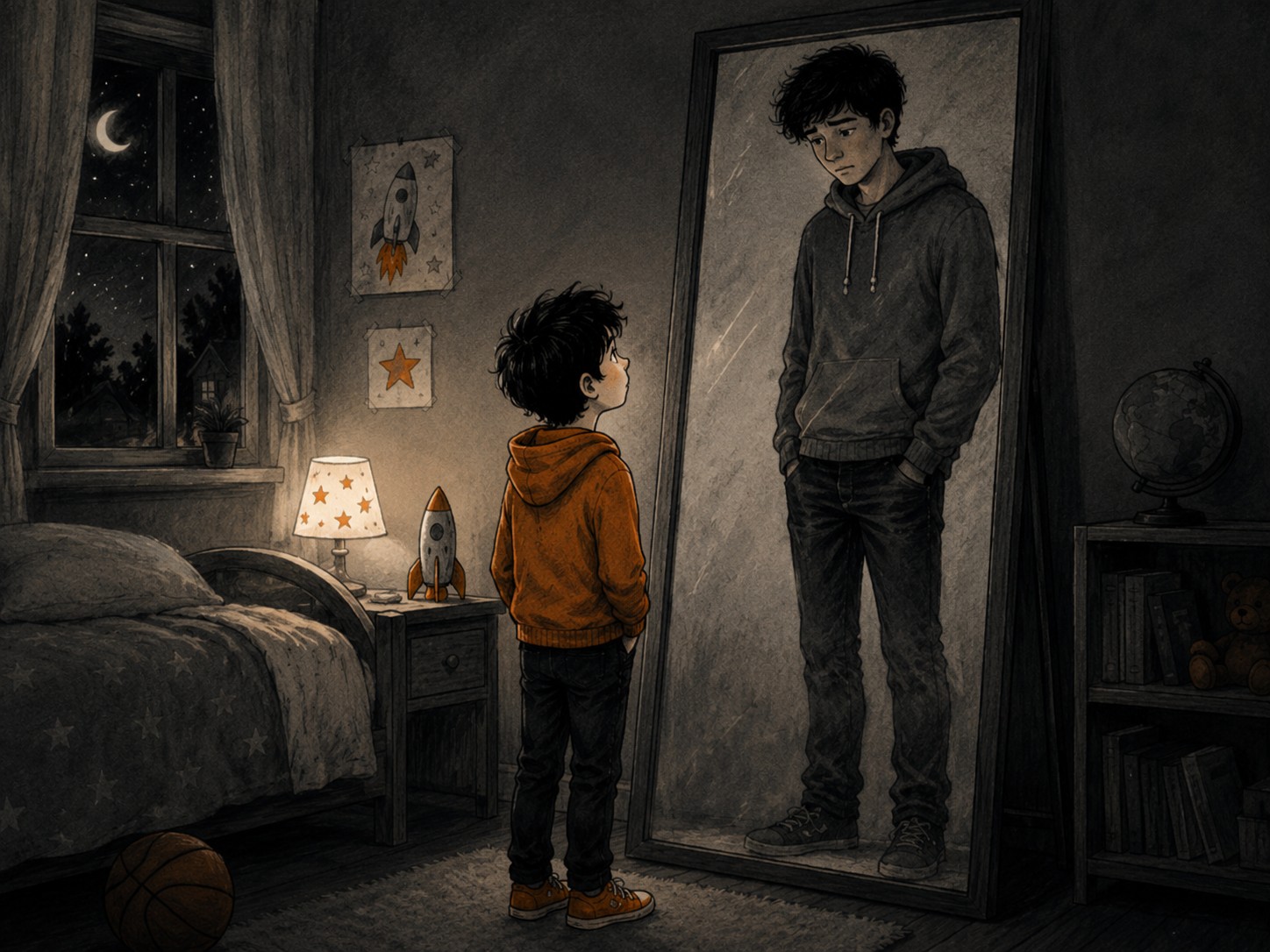
“He went from zero to sixty.”
“There was no warning.”
“He just flipped his lid for no reason.”
Schools say these things so often that they can start to sound like facts about the child.
But often they are really facts about the school’s own failure to notice what was happening earlier.
Children do not usually go from zero to sixty. Adults often start paying attention at sixty.
There is almost always a before
The school may describe a child’s behaviour as sudden, random, or unexplained.
But there is usually a before.
There may have been:
- noise the child could not filter out
- crowding in the hallway
- bullying adults did not see or record
- work the child could not start
- support that was promised but not there
- an adult response that added pressure
- a transition the child could not manage
- a whole day of holding it together
By the time the child hits, screams, swears, runs, hides, or falls apart, the school may record only the last five seconds.
Then they call the rest “no reason.”
That matters. If the school only records the crisis, the child becomes the problem. The environment disappears. The missing support disappears. The bullying disappears. The inaccessible work disappears.
The child is left holding all of it.
First, they tried to manage him
When he was small, the school built a system around his behaviour.
There were meetings. There was a behaviour plan. Then a safety plan. There were charts, points, cards, warnings, and rewards. Adults used words like:
- unexpected behaviour
- non-compliance
- dysregulation
- escalation
- incident
- unsafe behaviour
The plans tracked what he did.
They did not track the day that was happening to him.
The chart measured whether he stayed compliant. It did not ask why he was struggling.
The safety plan described what adults would do once he was already in crisis. It did not ask why he kept getting there at the same times, in the same places, with the same missing support.
The school was managing his behaviour because his behaviour created risk for them.
But the child underneath the behaviour stayed overwhelmed.
Then his parent became the problem
His mother started asking the questions the plans avoided.
She asked:
- Where was the support worker when this happened?
- What happened in the hour before?
- Was anyone watching the bullying?
- Was the IEP support actually provided?
- What did adults do afterwards to help him understand and repair?
- What will change next time?
These were reasonable questions.
But institutions often react badly when a parent asks them to look at their own role. The tone of the meetings changed. The mother became “difficult.” She became “demanding.” She became the parent who complained too much.
And somewhere in there, the school appeared to make a quiet calculation.
A child with a plan creates paper.
Paper can be requested. Paper can be challenged. Paper can become part of a complaint.
A child with no plan creates less paper.
So the school moved from managing him to managing her.
Then they chose nothing
The day he hurt another child, there was no incident report.
No phone call.
No debrief.
No one sat with him afterwards to help him understand what had happened. No one helped him face the harm. No one helped him repair. His mother found out later, by accident.
When she asked what the school had done after the incident, the answer was silence.
This is one of the most harmful things a school can do after a child comes apart.
They may think “doing nothing” is calm. They may think it avoids shame. They may think it avoids conflict with the parent.
But nothing is not neutral.
Nothing teaches too.
What nothing teaches
When a child is left unsupported before a crisis and then abandoned after it, they learn from the pattern.
They may learn:
- The triggers will keep coming.
- The adults will not notice early enough.
- I will fall apart.
- I will be humiliated.
- No one will help me understand what happened.
- No one will help me repair.
- No one can be trusted with my distress.
A child does not build accountability in a void.
Repair is how children learn after rupture. Repair needs a calm adult who stays with the child, helps them settle, helps them understand what happened, and helps them make it right.
This is how the school and the child learn what to do differently next time.
Silence removes that opportunity, creating a pattern.
Safety cannot mean “contain him or ignore him”
This is the trap.
At one end, the school tries to control the child with charts, consequences, restraint, removal, or behaviour plans that focus on compliance.
At the other end, the school does nothing and calls it inclusion.
Both can fail the child.
In both versions, the child’s real needs are not centred.
When the school manages him, it may be managing liability.
When the school ignores him, it may be managing the parent.
Neither is the same as support.
A child should not have to choose between being controlled and being abandoned.
After a hard episode, children need support
After a meltdown, conflict, aggression, running, or another serious incident, the goal should not be to shame the child. But it should also not be to pretend nothing happened.
A child may need help to:
- calm their body
- feel safe again
- understand what happened
- name what built up before the incident
- repair harm where possible
- return to the group with dignity
- know what adults will change next time
This is why a parent may ask the school to call them after a hard episode.
Not to remove the child from school forever.
Not to excuse harm.
Not to avoid accountability.
But to make the moment a hinge instead of a void.
A child may need to regulate first, then reconnect, then think. Adults often want reasoning before regulation. That usually does not work.
The child gets bigger, but the support gap stays
Parents can often see where the pattern is going long before the school admits it.
A small child who is described as “flipping his lid” may later be described as “posing a risk.”
The child may have the same nervous system, the same unmet needs, the same inaccessible environment, and the same unsupported day stacking up behind him.
But as the child grows, adults read the behaviour differently.
The support withheld at six can become the danger reported at sixteen.
That is why early support matters.
Not because disabled children are problems to be controlled, but because children deserve to learn safety, repair, trust, communication, and self-understanding before the consequences around them become harsher.
A plan should not disappear because a parent complains
A school should not stop documenting, debriefing, planning, or supporting a child because a parent is asking hard questions.
That is backwards.
If a parent is raising concerns about a behaviour plan, safety plan, or lack of support, the answer should be better planning, not less planning.
The school should be able to show:
- what happened before the incident
- what support was in place
- whether the IEP was followed
- what adults did during the incident
- what adults did afterwards
- what the child was helped to understand
- what repair was offered
- what will change next time
- how the child’s access to school will be protected
If there is no record, no debrief, no review, and no change, the school is not avoiding harm.
It is avoiding accountability.
What to ask for
If this pattern is happening to your child, you can ask for the school’s response to be put in writing.
You can ask:
Please document what happened before, during, and after the incident.
You can ask:
What support was in place at the time, and was the support in my child’s IEP actually provided?
You can ask:
What did adults do afterwards to help my child regulate, understand what happened, and repair harm?
You can ask:
What will change so this does not keep happening?
You can ask:
If the school is choosing not to create or follow a safety plan, please explain how staff will keep my child and others safe while maintaining my child’s access to education.
You can also ask:
How is the school tracking missed instructional time, removals from class, room clears, early pickups, and incidents where support was unavailable?
The goal is not paperwork for its own sake.
The goal is to stop the school from treating your child’s distress as random when the pattern is visible.
The quietest form of exclusion
Exclusion is not always a suspension letter.
Sometimes exclusion looks like a child being sent home.
Sometimes it looks like a partial day.
Sometimes it looks like sitting alone in a room.
And sometimes it looks like nothing at all.
No plan. No record. No debrief. No repair. No change.
This is one of the quietest forms of exclusion because there may be no single document to appeal and no single decision to point to. It works by accumulation. The child is worn down, day after day, until they begin to look like the problem the system said they were.
But the question remains:
What was happening around the child, what support was missing, and what will adults change next time?
If the school cannot answer that question, it has not tried everything.
It has tried managing the child.
Then it has tried managing the parent.
What it has not yet tried is support.
Also see
-
What are CPI, PBIS, ABA, and safety plans — and can I say no?
A guide to everything you ever wanted to know or didn’t want to know about school safety planning. When a school starts talking about your child’s behaviour, a lot of terms can come at you fast. These terms can sound official…
-
What can I do if school is not working for my child?
What to do when school is not working for your child, and how to translate distress into access, barriers, support, and next steps.
-
Why are staff so focused on how hard they are trying when my child is dying?
When your child is dying in front of you — sleeping most of the day, missing school, losing friends, losing weight, shutting down, or no longer seeming like themselves — and the school responds by listing everything they have tried, it…