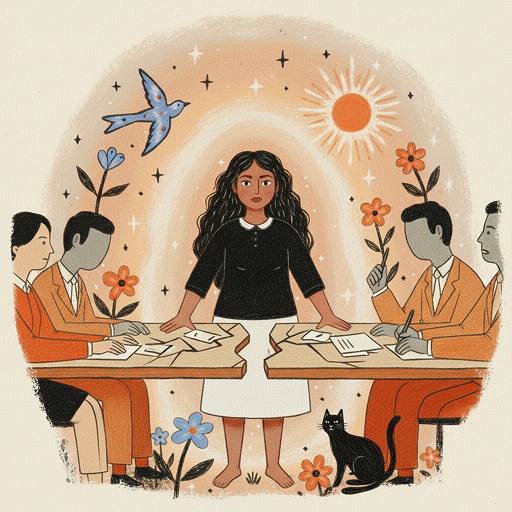
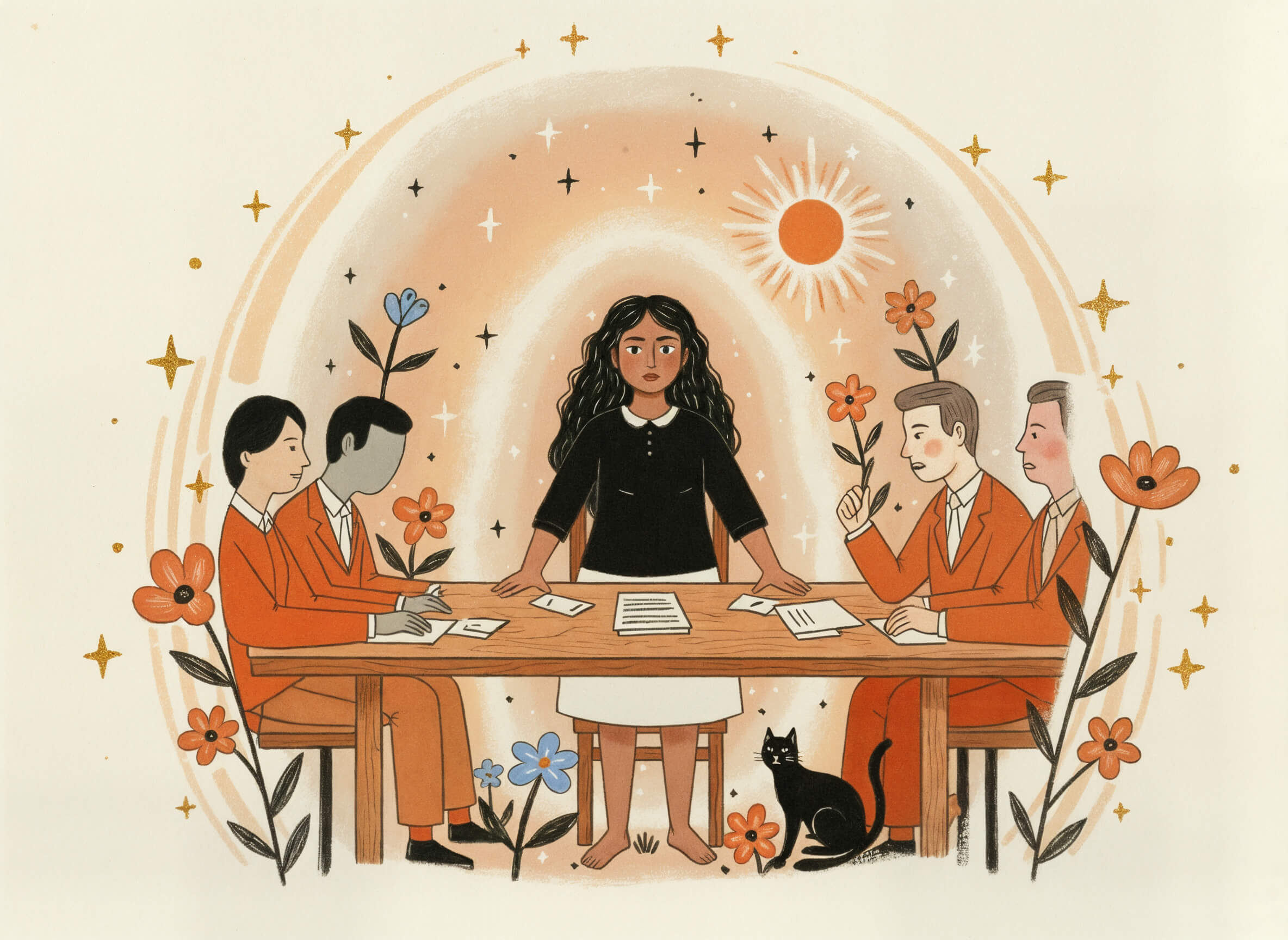
The first time you tell the truth in a school meeting, you can feel the room change.
You have spent months being warm and collaborative. You thanked people for their hard work, softened every concern into a question, and tried to be the kind of parent the school would want to work with.
Then one day you say it without softening it:
“My child is being harmed here“
It is as if a winter wind has flown through an open window and frozen every face in a scowl. Then, quickly, the faces rearrange to project concern. Pens begin moving. They write phrases like:
high conflict
does not understand teacher constraints
refer to district risk management process
The meeting seems to reorganise itself around a new problem. And somehow the problem is no longer what is happening to your child.
The problem is you.
What is a killjoy?
Sara Ahmed gives this figure a name: the feminist killjoy.
The killjoy is the one who says the true thing out loud — the thing everyone else agreed to talk around.
Once you have lived it, you see the pattern everywhere:
- You name the problem, and you become the problem.
- You say the ableism out loud, and the room treats your voice as the trouble.
- You point to the harm, and the room turns to manage your tone.
- You ask for accountability, and people begin to talk about relationships, processes, monitoring, next year, and fresh starts.
The harm was there, you just mentioned that in was there. Everyone shivers as if a chill has entered the room.

Schools run on good feeling
Every school meeting protects a mood. People want the meeting to stay warm, feel like we’re a team, and end on a positive note.
For a long time, you help keep the meetings warm. You acknowledge efforts, you say how the family is working hard to contribute, you are understanding that things take time and you try to trust the process.
You do it to keep your child safe with the adults across the table. You do it because those adults hold power over your child’s whole day. You do it to keep the door open.
This is reasonable. It is also the exact instinct the system relies on.
Kindness is good
Be kind anyway.
Kindness is a good way to move through the world. It softens a hard day. It helps tired adults remember the child in front of them.
Hold three truths at once:
- Kindness is one thing. Access is another.
- Warmth is one thing. Support is another.
- A good relationship is one thing. Your child’s rights are another.
Your niceness is the wrong currency
Many of us are taught that kindness is a strategy.
We hope that being reasonable, grateful, and easy to work with will move the people in power to help our child. We pay in warmth and wait for the system to pay us back in support.
Here is the exchange rate.
Niceness buys:
- a softer tone
- a warmer hello
- a more pleasant meeting
- more patience from the adults in the room
Your child’s rights answer to something stronger:
- the support written into the plan
- real accommodations
- safe access to school
- decisions that arrive on time
- accountability when harm happens
You can be the warmest parent in the district and still drive home with a child the system left waiting.
The system accepts your warmth and hands it back as patience you are asked to spend again. It praises the relationship while your child loses learning, friendships, and trust.

When good feeling covers harm
Good feeling turns dangerous the moment it covers harm. It happens when everyone in the room stays comfortable while the child stays shut out. It happens when the meeting stays polite while the situation stays frozen. It happens when the adults keep saying they care while the child keeps missing school.
At that point, the warm mood is doing a job. It shields the system from looking straight at what it does.
Ahmed writes about a willingness to cause unhappiness when the happiness in the room depends on someone else staying silent.
For a parent, that choice is smaller and heavier:
- You decide your child’s rights outweigh the comfort of the meeting.
- You decide your child’s safety outweighs being liked.
- You decide you would rather be called difficult than drive home agreeable and empty-handed.
Documentation asymetry
If you were considered a person, you could say something once. But you have to bring the same fair request again and again. You explain. You document. You clarify. You follow up. You try gentler words, then firmer ones. You asked clearly. You asked kindly.
Some systems are built to absorb pressure and keep the same shape.
They write down whatever they were going to write down. It doesn’t matter what you say, or what you do, you have become a symbol instead of a person. They will agree that you were unpleasant, it’s easier to catch flies with honey, and that you should at least try, even while you feel like you are bending over backwards so far that you will break.

Why complaints matter
Sooner or later, many parents learn the same hard lesson:
The tools with the most power are the tools the system will punish you for using.
A complaint is a tool that can shift a discussion. But if you make a complaint, you will be a killjoy.
Ahmed also writes about what institutions do to the people who complain. The complainer becomes the problem the institution wants to manage — in place of the harm the complaint describes. So you step into a role the system already knows how to dislike. You can almost see the words forming in the file:
the difficult parent
the unreasonable parent
the parent who keeps pushing
the parent who puts everything in writing
Let them write it. Everything you put in writing makes your child’s rights stick.

We file anyway
We file anyway. Many families win their children’s most basic rights only by becoming, on the record, a difficulty the system has to answer. We do it for one clear reason. Informal resolution trades accountability for calm. It offers warm words in place of timelines. It offers meetings in place of remedies. It offers promises in place of action. Children need more than unfulfilled promises.
So become a killjoy.
Give up the belief that being easy to like will help your child.
Give up one hope that being sweet will make your child more safe.
Name the harm.