

Blog
Most parents arrive at this page tired, confused, and quietly questioning themselves. You may have already asked for help — clearly and in good faith — and been met with delay, dismissal, or endless process. You may be wondering whether you’re overreacting, misunderstanding the system, or asking for too much. You’re not!
Recent posts
-

Making a Human Rights Complaint in BC (Recorded Webinar)
A 60-minute recorded webinar by People’s Law School, which explains how human rights complaints work in BC, including: Recommended for parents who want an online legal overview of whether discrimination might have occurred and how human rights…
-
Why this site exists: when something goes wrong at school
When something goes wrong at school—when a child is excluded, harmed, or unsupported—families are usually told to “work it out with the school first.” On the surface, that sounds reasonable. Most parents want…
-

Courthouse Libraries BC — human rights webinars
Courthouse Libraries BC (a trusted legal education provider) hosts webinars including: These sessions are often aimed at both the public and legal intermediaries and are solid introductions to legal processes. Learn more
-

When does lack of support become child abuse?
There is a moment — and every parent of a disabled child in a BC school has felt it, even if they could not yet articulate it — when the institutional explanation for…
-

Timeline matters in district complaint processes
In many school district complaint procedures, the steps are clear enough. Talk to the teacher. If the issue isn’t resolved, go to the principal. If that doesn’t work, escalate to the district. In…
-

Don’t wait for an apology to heal
The apology is probably not coming. It is worth saying plainly, before anything else, because so much of what keeps families suspended in the aftermath of institutional harm is the unspoken anticipation of…
-

Solving problems at school: discrimination and rights
This page addresses discrimination in BC schools on the basis of disability, race, gender, and other protected characteristics under the BC Human Rights Code, and the complaint pathways available when a school’s conduct…
-
Solving problems at school: institutional harm patterns
This page addresses the patterns of institutional behaviour that compound the original harm — gaslighting, information withheld, goalpost shifting, advocacy punished as aggression, and tone policing — and the complaint pathways available when…
-
Solving problems at school: crisis, restraint, and safety
This page addresses physical restraint, isolation, crisis intervention, and unsafe school conditions in BC schools, and specifically their impact on disabled and neurodivergent children, who are disproportionately subjected to these practices. A child…
-

Solving problems at school: punitive discipline and behaviour systems
This page addresses punitive discipline and behaviour management practices in BC schools, and specifically their impact on disabled and neurodivergent children, who bear a disproportionate share of their harm. When a school applies…
-
Solving problems at school: accommodation and IEP failures
When a school fails to accommodate a disabled child, it rarely announces the failure plainly. The accommodation does not arrive. The IEP goal sits unimplemented. The education assistant’s support is reduced without meaningful…
-

Solving problems at school: exclusion and removal
Exclusion takes many forms in BC schools, and most of them have been given names designed to obscure what they are. A “gradual entry plan” is a partial schedule. A “room clear” is…
-
A parent’s complaint guide for BC schools: when to push and when to escalate
Every parent who has sat across a table from a principal and left the meeting with nothing resolved, or who has spent three weeks drafting a letter that generated a two-line reply, knows…
-
BC’s Office of the Human Rights Commissioner — educational sessions
BC’s Human Rights Commissioner periodically hosts free 90-minute webinars on topics like: These are not legal advice but good background on what rights you have under BC law. Learn more
-
Using timelines effectively in school advocacy
I send the email and add one line to my timeline: “9 February 2026: asked for update on IEP.” It takes fifteen seconds. The timeline grows with every email I send. A week…
-
BC Human Rights Clinic — online workshops & videos
The BC Human Rights Clinic regularly offers workshops, training, and recorded webinars about: These resources are practical and directly connected to legal help organisations that assist complainants. Learn more
-

Five complaint architectures in BC schools
If you read one district’s complaint policy, it can seem reasonable. If you read sixty of them, the reasonableness starts to fracture into something more recognisable: a set of structural patterns, repeated with…
-
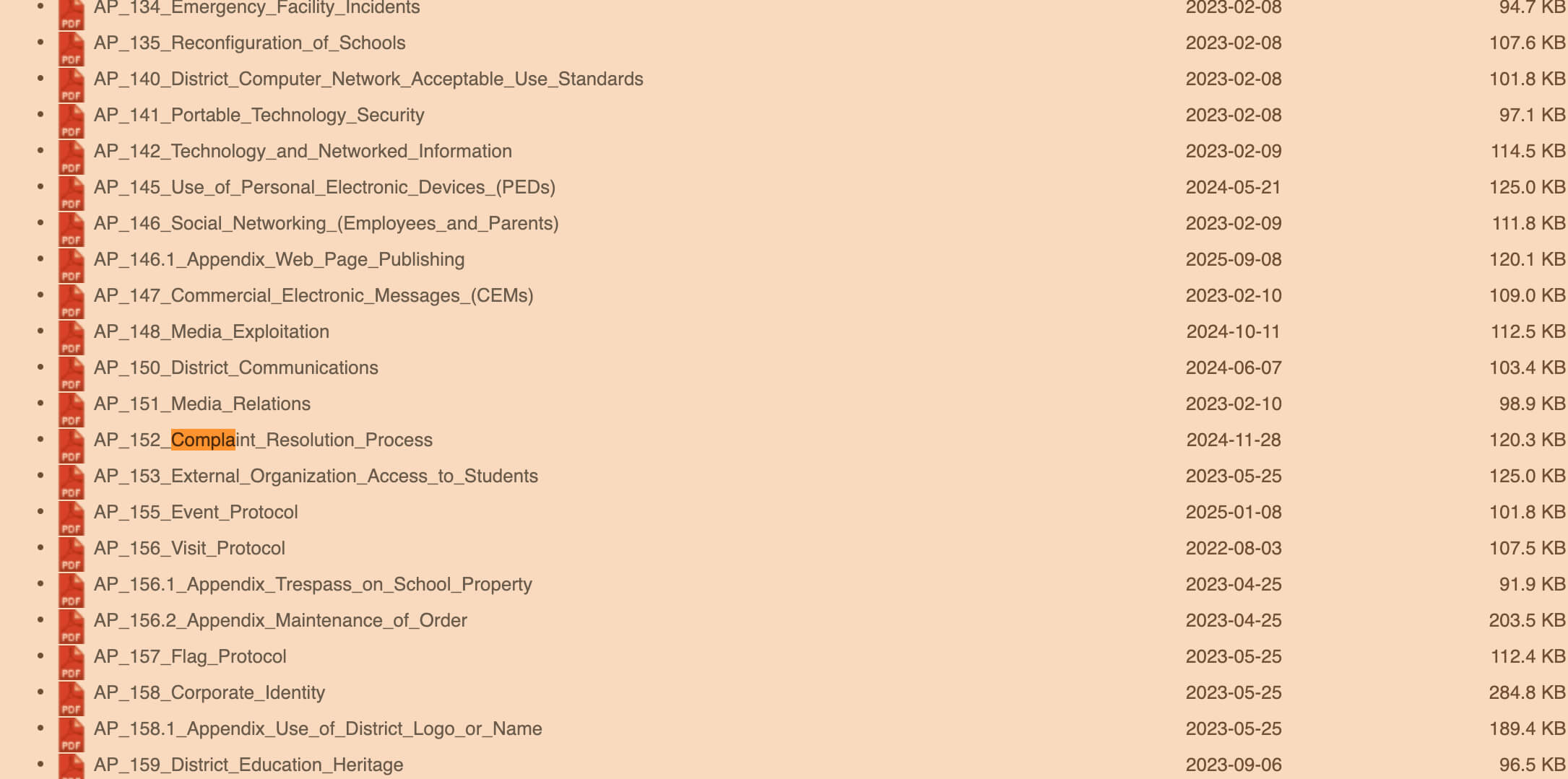
Making a complaint School District 73
If you’ve found yourself reading your district’s complaint policy, chances are you didn’t get here easily. Most parents arrive at this point after months — sometimes years — of trying to make things…
-
Universal design is helpful. Individualised accommodation is a human right
School districts often respond to individualised accommodation requests by pointing to universal classroom strategies: flexible seating for everyone, movement breaks built into the schedule, visual schedules on the wall, calm corners open to…
-

How districts redirect—and how to stop them
When families request accommodation, districts rarely respond by addressing the child’s needs directly. Instead, they shift the focus. Each response often moves attention away from your child and toward institutional constraints, systemic limits,…