

Your child is in Grade 1. They have been sent home early every day for a month.
Every day, you get the call, or the look, or the carefully casual comment at pickup. Did she sleep well last night? Was anything different at home? Did she eat breakfast? Maybe tomorrow will be better.
The words may sound ordinary. The accumulation does something else.
After enough days, every comment starts to feel like an indictment. You begin scanning faces. You hear the question underneath the question. You wonder whether they think you are doing something wrong, whether your child is being difficult, whether you are being too much, whether the staff are tired of seeing you, whether your polite follow-up email made things worse.
This is one of the quiet harms of informal exclusion. The child loses school. The parent absorbs the blame.

Early pickup can become exclusion
An early pickup can be appropriate in a genuine emergency. A child may be sick. A situation may become unsafe. A one-time call home may make sense.
A child being sent home early every day for a month is a different pattern.
At that point, the issue has moved beyond a bad day. It has become a routine loss of access to school.
If the child is disabled, has suspected disability-related needs, or is being sent home because the school says it cannot manage behaviour, regulation, safety, toileting, transitions, fatigue, or support needs, the family should treat the pattern as an access issue.
The school may describe it as temporary. They may call it a transition plan, a reset, a safety measure, a gradual return, or a response to the child’s needs. The language matters less than the result.
The child is missing school.
The plan is the pattern.
Why the parent starts to feel watched
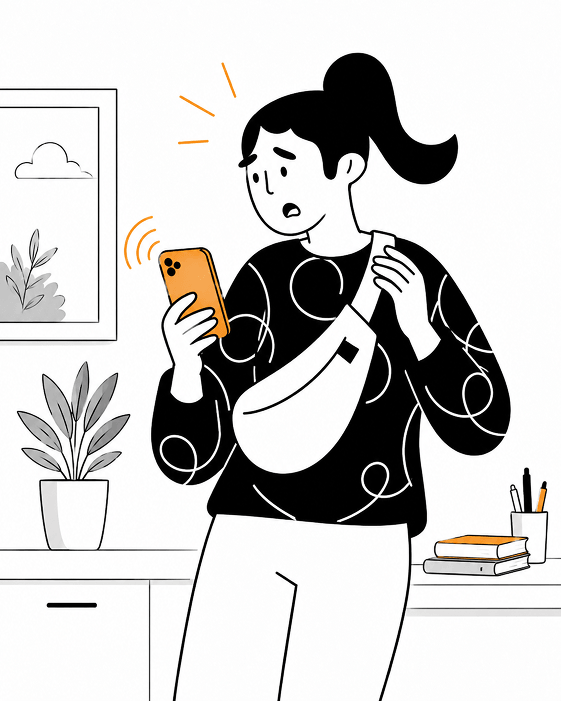
Parents often describe the pickup routine as one of the hardest parts. The staff may be polite. They may even be kind. Still, the parent feels the darts.
A look. A sigh. A tight smile. A question about bedtime. A comment about lunch. A suggestion about routines. A reminder that “she had a hard day.” A staff member speaking slowly, as if the parent has not understood the situation. Another adult standing nearby, listening.
These moments can feel private and humiliating, but they are part of a larger institutional pattern. When a school cannot provide what a child needs, pressure often moves outward onto the family. The parent becomes the place where the system deposits its stress.
Sometimes staff do this deliberately. Sometimes they do it automatically because scarcity has trained them to locate the problem in the child or home rather than in the lack of support. Either way, the effect is the same.
You start to feel invalidated because the process is invalidating.
You start to feel like nothing ever gets done because delay is the plan.

The blame shift
When a school repeatedly sends a young child home, the conversation can quietly move away from the school’s duty to provide access and toward the parent’s ability to produce a more manageable child.
The questions often sound small:
Did she sleep well?
Was there a change at home?
Can you talk to her about expectations?
Can you pick her up a little earlier tomorrow?
Can we try half days for now, just until she is ready to be her full days?
Some of these questions may have a place in understanding the child. The problem begins when they become a substitute for school-based support.
A six-year-old should not have to become easier to educate before they are allowed to attend school.
A parent should not have to solve a staffing, planning, accommodation, or inclusion failure from the parking lot.
What to document
Start writing down the pattern in plain language. You are not trying to write a perfect legal argument. You are creating a record that makes the loss of access visible.
Track:
| What to record | Example |
|---|---|
| Date | Monday, January 8 |
| Time child was sent home | Called at 10:15 a.m.; picked up at 10:45 a.m. |
| Reason given | “He was dysregulated after recess” |
| Who called or spoke to you | Teacher, principal, EA, office staff |
| What support was tried before pickup | Sensory break, quiet room, call to parent, unknown |
| Whether pickup was presented as optional or required | “You need to come get her” |
| What your child missed | Literacy, recess, lunch, art, field trip, peer time |
| Any comments made to you | “Did she sleep last night?” |
| Child’s condition after pickup | Crying, ashamed, exhausted, confused, fine once home |
The goal is to show the pattern clearly: how often this is happening, how much school the child is missing, what reasons are being given, and what supports are being offered before removal.
The record turns a series of “bad days” into an access issue.

What to ask for
A useful email should be short, factual, and focused on access. The school may want to discuss the child’s behaviour, your home routines, or everyone’s stress. Bring the conversation back to the concrete issue: your child is being denied full-day attendance.
You can ask:
- What is the current plan for restoring full-day attendance?
- What supports will be added so my child can remain at school?
- Who is responsible for implementing those supports?
- What is the timeline?
- How will missed instructional time be addressed?
- What data is the school using to decide that early pickup is required?
- What alternatives are being tried before calling me?
- Is this reduced schedule being documented as a formal plan?
You are asking the school to move from informal removal to accountable planning.
A short email you can send
Subject: Repeated early pickups and loss of school access
Dear [name],
I am writing to document that [child’s name] has been sent home early on [number] school days since [date]. This has resulted in a significant loss of instructional time and school access.
I understand that staff may be concerned about [child’s name]’s regulation and support needs. However, the current pattern is not sustainable. [Child’s name] needs a plan that supports them to remain at school, rather than a routine where I am called to pick them up early.
Please provide the following in writing:
- The school’s plan for restoring [child’s name] to full-day attendance;
- The supports that will be put in place before calling me for early pickup;
- The staff member responsible for coordinating the plan;
- The timeline for review; and
- How the missed instructional time will be addressed.
I would like this addressed urgently, as [child’s name] is losing access to school every day this continues. Please reply by Monday.
Sincerely,
[Your name]
If the school keeps focusing on home
A school may keep returning to sleep, breakfast, parenting, routines, outside assessments, or whether the child is “ready” for a full day. You can answer briefly, then redirect.
Try:
I am willing to share relevant information that helps the school support my child. At the same time, the immediate issue is that my child is being sent home early every day. I need the school’s plan for supporting full-day attendance.
Or:
Home routines may be one part of understanding my child, but they do not replace the school’s responsibility to provide access and support during the school day.
Or:
I am concerned that the focus is shifting to home factors while my child continues to lose school time. Please confirm what supports will be added at school.
If you feel blamed
The feeling matters.
Parents often minimise this part because each comment seems small on its own. But the pattern can be deeply destabilising. You may start apologising automatically. You may feel ashamed walking into the school. You may dread your phone ringing. You may become hypervigilant about every staff expression, every pickup conversation, every word in every email.
That does not mean you are overreacting.
It means the process is effecting you, like it has impacted so many parents.
Informal exclusion often depends on making the parent absorb what the system has failed to solve. The parent becomes the emergency plan. The parent becomes the regulation strategy. The parent becomes the person who leaves work, cancels appointments, apologises, explains, smooths, waits, and tries again tomorrow.
Your child’s access to school should not depend on how much disruption your family can absorb.
When to escalate
Escalation makes sense when early pickups have become routine, the school has no written plan, the child is missing significant time, or staff keep treating the issue as a family problem rather than an access problem.
You can write to the principal first. If the pattern continues, write to the district. Use plain language:
My child is being sent home early every day. This is now a repeated loss of access to education. I am requesting an urgent written plan to restore full-day attendance with appropriate supports.
If your child has a disability or suspected disability-related needs, you can also name accommodation:
I am concerned that my child is losing access to school because their disability-related needs are not being accommodated. I am asking for an immediate plan to support full-day attendance.
Keep the focus on the pattern. Keep the dates. Keep the record.
The bottom line
Being polite should not require you to accept your child being sent home every day. Being collaborative should not mean carrying the school’s failure quietly. Being understanding about staff stress should not mean letting your six-year-old lose access to school while adults wait for the child to become easier to include.
If you feel blamed, pay attention. If you feel like the conversation keeps moving away from your child’s access, redirect it. If you feel like nothing is happening, put the pattern in writing.
The issue is not whether everyone is trying.
The issue is whether your child is at school.