

When families ask for support at school, they are often pushed into vague or informal language: “My child needs more help,” “my child cannot cope,” or “my child refuses school.” Those statements may be true, but they often let the school respond as though the issue is preference, behaviour, staffing, or parenting.
Rights-based language does something different. It connects the child’s need to access, barriers, accommodation, safety, dignity, participation, and loss of instructional time. It helps families describe what is happening in a way that is clearer, harder to dismiss, and more useful if the matter later becomes a formal complaint.
This does not mean families need to sound legalistic. The goal is not to use fancy words. The goal is to describe the problem accurately: a disabled child is entitled to meaningful access to education, and the school has a duty to identify and address disability-related barriers.
Before we get to the wording
School meetings can do things to your body before anyone has even said a word.
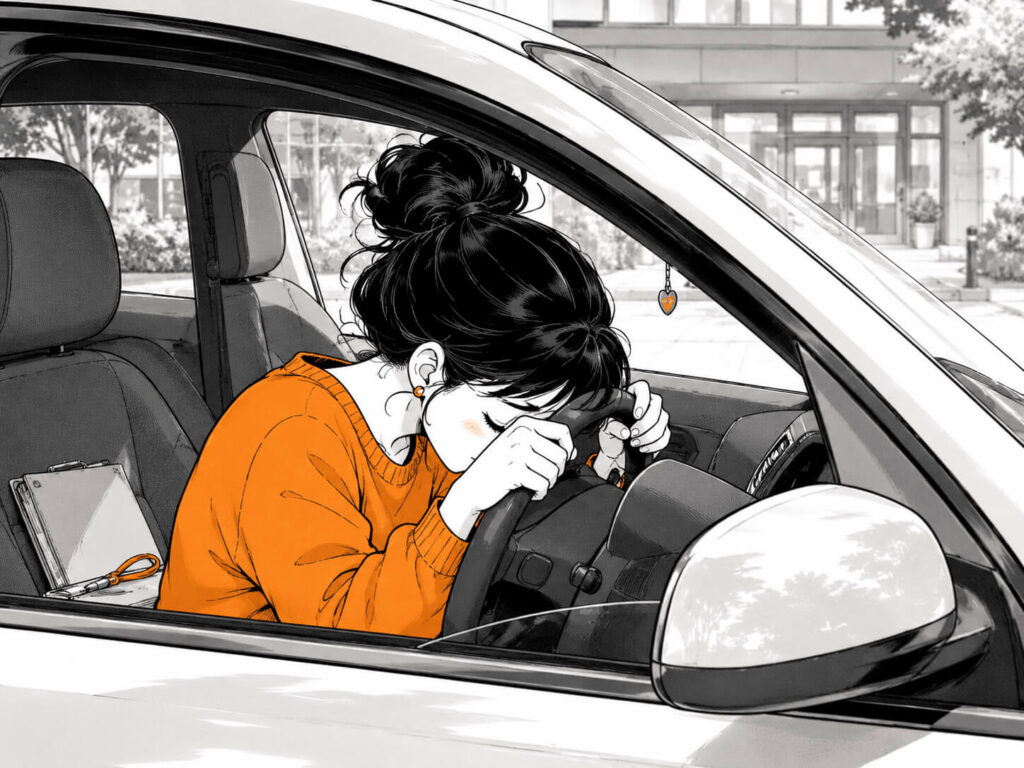
You may sit in the parking lot with your head on the steering wheel, trying to gather enough strength to walk in. You may cry while preparing your notes. You may feel your heart racing, your stomach dropping, your hands shaking, or your body reacting in ways that feel embarrassing or impossible to control. That does not mean you are too emotional, too difficult, or not collaborative enough. It may mean your body remembers what has happened in these rooms before.
Families are often told that they need to collaborate with the school. Collaboration can be important, but it does not mean pretending everything is fine. It does not mean agreeing to vague reassurance, accepting delay, softening every sentence, or avoiding the word discrimination because it makes other people uncomfortable. It does not mean carrying the emotional labour of keeping everyone else calm while your child continues to lose access.
Real collaboration requires more than a polite meeting tone. It requires shared attention to the barrier, honest documentation of what is happening, clear timelines, and a plan that can be reviewed. A family can be respectful and still be direct. A parent can be distressed and still be credible. You can want a working relationship with the school and still insist that your child’s access needs are named, documented, and addressed.
Rights-based language is not about sounding cold or legalistic. It is a way to stay anchored when the conversation starts drifting toward personality, behaviour, staffing, parenting, or patience. It helps you bring the meeting back to the central question:
what does my child need in order to safely and meaningfully access school?

How to shift the language
Here’s a series of ideas about how you might ask for something that you think would work for your child, but using rights-based language:
EA support
You may have been told to wait and see how your child does once school starts. But you are not starting from nowhere. You already know what it takes to get through a day. When you are giving your full attention and still barely preventing overwhelm, it is hard to imagine how one teacher can provide that support alone while also caring for a full classroom.
That concern is not overprotectiveness. It is what you know from living it.
So naturally, you may find yourself saying
“My child needs 1:1 EA support”
Why this wording can get stuck
This ask makes sense, but schools may respond by turning the conversation into a debate about staffing. You can end up in a long, exhausting discussion about whether the school “does” one-to-one support, whether the child is “independent enough,” or whether other students also need help. That can pull the focus away from the real question: what support does your child need to safely and meaningfully access instruction?
Try this instead
“My child needs consistent access to a trusted adult who can provide co-regulation, predictability, communication support, and proactive check-ins so they can safely access instruction and remain in the classroom.”
Why this version helps
Asking for “1:1 support” can make sense, but it often sends the meeting into the staffing labyrinth. Suddenly the conversation is about whether the school provides that kind of support, whether other students need help too, or whether your child should become more independent. Meanwhile, the real issue can disappear: your child needs reliable adult support to access school safely.
This wording keeps the focus on the function of the support. It asks the school to respond to the barrier, not just defend the staffing model.
Transitions
You may have been told your child needs to “get used to” transitions or become more flexible. But you already know transitions are not just small moments between activities. They can be the exact point where everything falls apart.
You may know what it is like to prepare your child carefully, give reminders, reduce demands, stay calm, and still watch them become overwhelmed when the next thing comes too fast, too loudly, or without enough warning. That does not mean your child is refusing to move on. It may mean the transition itself is an access barrier.
So naturally, you may find yourself saying
“My child cannot handle transitions.”
Why this wording can get stuck
This wording makes sense, but schools may hear it as a problem inside the child: they are rigid, non-compliant, resistant, or unable to cope. Once the conversation goes there, families can get pulled into advice about flexibility, incentives, consequences, or “building tolerance,” instead of a plan for making transitions accessible.
The more useful question is not whether your child should be able to handle transitions. The more useful question is what needs to change before, during, and after transitions so your child can stay regulated, safe, and connected to learning.
Try this instead
“My child experiences transitions as a disability-related access barrier. They need a predictable transition plan, advance notice, visual or written cues, reduced waiting time, and adult support before, during, and after transitions so they can remain regulated and avoid losing instructional time.”
Why this version helps
This version shifts the focus from “my child cannot handle it” to “this part of the school day needs accommodation.” It names the specific supports that could reduce distress and makes it harder for the school to treat transition struggles as a behaviour problem.
It also asks for planning across the whole transition, not just a reaction after things have already escalated. That matters because support that arrives after the child is overwhelmed is often too late to protect access.
School avoidance
You may have been told your child “just needs to come to school” or that attendance has to be the first priority. But you already know that a child who cannot get through the door is often telling us something important. They may not have the words for what feels unsafe, overwhelming, humiliating, unpredictable, or impossible. They may only have refusal.
You may know what it is like to spend the morning trying every gentle strategy you have, while the clock keeps moving and everyone becomes more distressed. By the time a child is refusing school, families are often not dealing with a simple attendance problem. They are dealing with the fallout of barriers that have gone unresolved for too long.
So naturally, you may find yourself saying
“My child refuses to go to school.”
Why this wording can get stuck
This wording makes sense, but schools may hear “refuses” and treat the problem as motivation, compliance, parenting, or anxiety that lives only inside the child. The conversation can quickly become about getting the child back into the building, instead of asking what made school feel inaccessible in the first place.
That can leave families stuck between pressure to improve attendance and a child who is showing, very clearly, that the current plan is not working. The more useful question is not simply how to make the child attend. The more useful question is what needs to change so attendance becomes safe and possible.
Try this instead
“My child’s school avoidance appears connected to unresolved barriers in the school environment. We need the district to identify the disability-related barriers affecting attendance and create a documented re-entry and accommodation plan that restores safety, trust, and meaningful access.”
Why this version helps
This version shifts the focus from refusal to access. It asks the school to look at the conditions around attendance: safety, trust, predictability, sensory load, peer conflict, adult responses, missed accommodations, and past harm.
It also asks for a documented re-entry and accommodation plan, not just pressure to return. That matters because a child can be physically present in a building and still have no meaningful access to school.
Repeated removals from school
You may have been told the school is calling for pickup because your child is having a hard day, needs to reset, or cannot be safely supported right now. At first, it may sound temporary. But you may already know the pattern: every early pickup costs your child instruction, belonging, routine, and trust.
You may also know what it feels like to rearrange work, drop everything, arrive at the school, and take home a child who is already overwhelmed or ashamed. By the time this keeps happening, the issue is no longer just one difficult day. It is a pattern of lost access.
So naturally, you may find yourself saying
“My child keeps getting sent home.”
Why this wording can get stuck
This wording makes sense, but schools may treat each pickup as a separate incident: a bad day, a safety concern, a behaviour episode, or a temporary solution. That can make the pattern harder to see. Families can end up discussing what happened that day instead of asking why the child keeps losing access to school.
The more useful question is not whether the school had a reason to call you once. The more useful question is what plan exists to prevent repeated removals, restore full access, and make sure your child is not being informally excluded from education.
Try this instead
“My child is losing access to education through repeated removals from school. If the school believes they cannot safely support my child for the full day, we need a written plan identifying the barriers, the accommodations being provided, the criteria for increasing attendance, and the review timeline.”
Why this version helps
This version names the pattern as a loss of educational access, not just a series of pickups. It asks the school to explain what barrier is preventing full-day attendance, what accommodations are being provided, and how the plan will be reviewed.
That matters because repeated removals can become informal exclusion when there is no written plan, no timeline, and no clear path back to full participation. A child should not have to keep losing school time while adults treat each removal as if it is disconnected from the last one.
Breaks
You may already know that your child needs chances to step away before things fall apart. You may know the signs: the body getting tense, the words disappearing, the noise becoming too much, the small demand that suddenly becomes impossible. You may also know that if no one helps early enough, the “break” comes too late and everyone acts surprised when your child is already overwhelmed.
But there is another worry families carry too. A break can help a child return to learning, or it can become the place where a child is quietly parked because the classroom has not been made accessible. Parents can often feel the difference.
So naturally, you may find yourself saying
“My child needs breaks.”
Why this wording can get stuck
This wording makes sense, but schools may treat “breaks” as a vague strategy rather than an accommodation. A child may be sent to the hallway, office, learning support room, sensory space, or another location without a clear purpose, timeline, or plan for returning to learning. Over time, what started as support can become a pattern of being outside the classroom.
The more useful question is not simply whether your child can take a break. The more useful question is what the break is for, when it should happen, who supports it, and how it helps your child return to meaningful participation.
Try this instead
“My child needs planned regulation breaks as an accommodation, not informal exclusion from learning. Breaks should be proactive, predictable, dignity-preserving, and connected to a return-to-learning plan, so they support access rather than reduce it.”
Why this version helps
You may already know that your child is not just struggling with “social skills.” They may be lonely, left out, misunderstood, avoided, teased, or known only by the hardest moments other people have seen. You may know what it feels like to watch your child want connection but not know how to enter it safely, or to see them give up because school has taught them that belonging is not really available to them.
Families are often told that friendships will happen naturally, or that children need to figure things out on their own. But belonging is not always natural when a child has already been marked as different, difficult, unsafe, annoying, immature, or too much. Sometimes peer connection needs adult attention, repair, and protection.
Friendship and belonging
You may already know that your child is not just struggling with “social skills.” They may be lonely, left out, misunderstood, avoided, teased, or known only by the hardest moments other people have seen. You may know what it feels like to watch your child want connection but not know how to enter it safely, or to see them give up because school has taught them that belonging is not really available to them.
Families are often told that friendships will happen naturally, or that children need to figure things out on their own. But belonging is not always natural when a child has already been marked as different, difficult, unsafe, annoying, immature, or too much. Sometimes peer connection needs adult attention, repair, and protection.
So naturally, you may find yourself saying
“My child needs help making friends.”
Why this wording can get stuck
This wording makes sense, but schools may hear it as a soft social concern rather than an access issue. They may suggest clubs, buddy benches, lunch groups, or general encouragement without looking at the conditions that are making friendship hard in the first place.
The more useful question is not simply whether your child has friends. The more useful question is whether the school is actively supporting belonging, preventing isolation, addressing stigma, and making sure your child can participate safely in the social life of the school.
Try this instead
“Peer connection and belonging are part of meaningful school access. My child needs intentional adult support to build safe peer relationships, prevent isolation, address stigma or reputation harm, and participate in the social life of the school community.”
Why this version helps
This version frames friendship as part of access and belonging, not as a bonus if everything else is already going well. It asks the school to look at the social environment around the child, including whether adult responses, peer narratives, exclusion, or unresolved harm have affected the child’s ability to connect.
It also helps move the conversation away from blaming the child for not knowing how to make friends. A child may need support with social communication, but the school also has a role in shaping whether the community around that child is safe enough for friendship to grow.
Noise, sensory overwhelm, and chaotic environments
You may already know that your child is not simply “sensitive” or “overreacting.” You may know what happens when the room gets too loud, the hallway gets too crowded, the lights feel too bright, the instructions come too fast, or too many people are moving and talking at once. You may know that your child can sometimes hold it together in the moment, then fall apart later because their body has been working too hard all day.Families are often told that schools are busy places and children need to get used to them. But a child cannot learn from an environment their nervous system is fighting to survive. If the setting is constantly overwhelming, the barrier is not just inside the child. The environment itself needs accommodation.
So naturally, you may find yourself saying
“My child cannot manage the noise and chaos.”
Why this wording can get stuck
This wording makes sense, but schools may hear it as a tolerance problem. The conversation can become about helping the child cope with noise, practise flexibility, use headphones, or build stamina, without asking whether the school environment can be changed.
The more useful question is not whether your child can learn to tolerate an overwhelming setting. The more useful question is what environmental changes would reduce sensory load so your child can stay regulated, participate, and access instruction.
Try this instead
“Sensory overwhelm is a barrier to my child’s access. They need environmental accommodations such as quieter entry points, access to a low-stimulation space, noise reduction, predictable seating, advance warning of high-sensory events, and a plan for safe participation.”
Why this version helps
This version names sensory overwhelm as an access barrier, not a personal weakness. It asks the school to look at the environment: noise, crowding, transitions, seating, lighting, waiting, assemblies, lunchrooms, hallways, and other high-sensory parts of the day.
It also makes the support more concrete. The goal is not to remove the child from school life, but to make participation safer and more predictable. A sensory plan should help the child access more of the school day, not simply give adults a place to send them when the environment becomes too much.
Disability-related behaviour and discipline
You may already know that your child is not choosing to fall apart. You may know the difference between a child who is being careless and a child who has lost access to language, safety, flexibility, or control. You may know what happened before the behaviour: the missed cue, the sudden change, the sensory overload, the social confusion, the adult response that escalated things, or the support that arrived too late.
Families are often told that behaviour has consequences. But when behaviour is connected to disability, distress, communication, overwhelm, or an unmet access need, discipline can make the problem worse. A child who is punished for showing distress may learn that school is not a safe place to struggle.
So naturally, you may find yourself saying
“My child is being punished for behaviour they cannot control.”
Why this wording can get stuck
This wording makes sense, but schools may respond by debating whether the child could control the behaviour, whether the consequence was reasonable, or whether other students were affected. Families can get pulled into arguing about intent, blame, and discipline instead of asking what the behaviour was communicating and what support was missing before it happened.
The more useful question is not only whether the behaviour was acceptable. The more useful question is whether the school identified the disability-related barrier underneath the behaviour and responded with accommodation, de-escalation, teaching, and support.
Try this instead
“My child’s behaviour may be disability-related communication or distress. The school needs to identify the unmet need or barrier underneath the behaviour and respond with accommodation, de-escalation, and skill-building rather than discipline that removes access.”
Why this version helps
This version does not excuse harm or pretend the behaviour had no impact. It asks the school to look underneath the behaviour before relying on consequences. That matters because behaviour support should begin with understanding what the child could not access, tolerate, communicate, or manage in that moment.
It also keeps the focus on access. If discipline repeatedly removes a disabled child from learning without addressing the barrier, the consequence can become another form of exclusion. The goal should be safety, repair, and support that reduces the chance of the same crisis happening again.
Modified schedules
You may already know the terrible calculation families make when school is going badly. A shorter day may feel like the only way to stop the daily crisis, protect your child from more harm, or give everyone a chance to breathe. You may agree to it because you are scared of what will happen if nothing changes, not because you believe your child should receive less education.
Families are often told that a modified schedule is temporary, supportive, or in the child’s best interests. Sometimes a shorter day can be part of a careful plan. But when there is no written rationale, no review date, no added support, and no clear path back to full attendance, a modified schedule can quietly become exclusion.
So naturally, you may find yourself saying
“My child needs a modified schedule.”
Why this wording can get stuck
This wording makes sense, but schools may treat the reduced schedule itself as the solution. Once the child is attending for less time, the immediate crisis may look smaller, even if the underlying barriers have not been addressed. Families can then get stuck trying to prove their child is ready for more time, instead of asking what support is needed to make more time possible.
The more useful question is not simply how long your child can last at school. The more useful question is what barriers are preventing full access, what accommodations are being added, and what timeline will move the child back toward meaningful participation.
Try this instead
“If a reduced schedule is being considered, it must be treated as a temporary accommodation with a clear purpose, written rationale, review date, plan to restore full access, and supports to prevent the reduced day from becoming informal exclusion.”
Why this version helps
This version does not reject every shortened day. It recognises that a reduced schedule may sometimes be needed to stabilise a situation or support re-entry. But it makes clear that reduced attendance should not become a substitute for accommodation.
It also asks for the safeguards families need: a reason, a timeline, added support, review, and a plan to restore access. Without those safeguards, the child may lose more and more school while everyone talks about readiness instead of responsibility.
Why wording matters
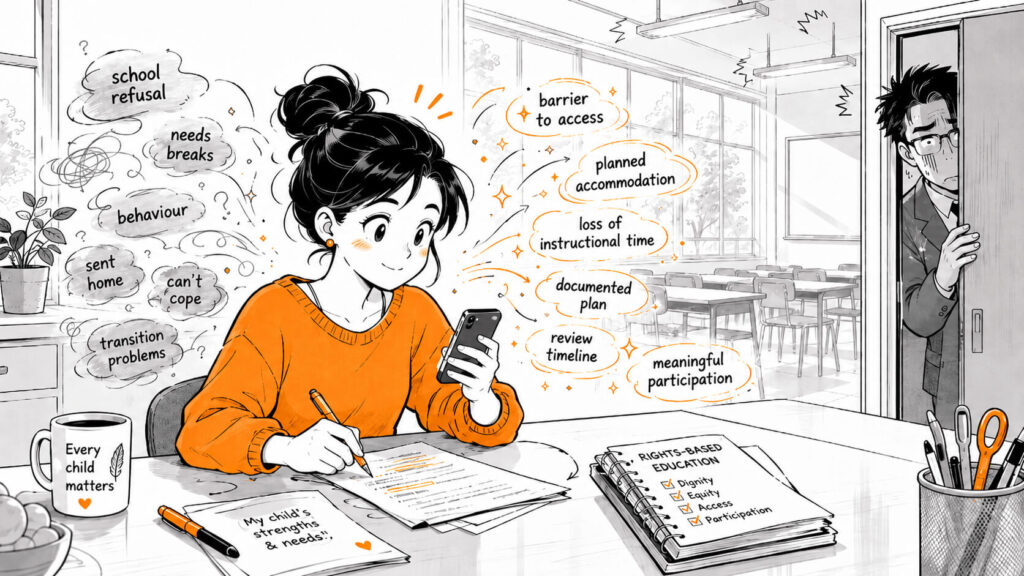
Families should not have to use perfect language to receive support. Schools and districts have their own duty to recognise disability-related needs and respond appropriately. But in practice, clearer language can help prevent concerns from being minimised, reframed, or delayed.
Rights-based language helps make the harm visible. It turns scattered concerns into a clearer pattern: loss of access, unresolved barriers, informal exclusion, missed instruction, unsafe conditions, and lack of meaningful accommodation.
That clarity matters in meetings. It matters in emails. It matters if you need to escalate. Most importantly, it helps keep the focus where it belongs: on what the child needs in order to safely and meaningfully belong at school.