

FAQs

Most parents arrive here tired, confused, and questioning themselves. You may have asked for help clearly and in good faith, only to meet delay, dismissal, or endless process. You may wonder if you are overreacting, misunderstanding the system, or asking for too much. You are not.
K12 Complaints turns parent lived experience into plain-language tools for naming barriers, documenting concerns, and deciding what to say next. These resources are not a substitute for advocacy or legal advice. For broad overviews of general topics, also see Topics.

How do I know if advocacy has turned into a time trap?
Advocacy becomes a time trap when it consumes increasing amounts of energy while producing diminishing returns. Parents often describe this as constantly preparing: drafting emails, gathering documentation, attending meetings, following up, waiting — only to find themselves back…

How do I know if my child actually needs accommodation?
If your child is regularly stressed, exhausted, struggling to learn, or unable to participate even with support at home, that is a sign they may need accommodation. Accommodation is about removing barriers—not waiting for a crisis. What accommodation…

How do I know if what’s happening at school is serious enough to complain about?
Many parents hesitate to complain because they’re unsure whether what they’re seeing is “bad enough.” We all know that schools are underfunded and that classrooms are struggling. Schools rely on that uncertainty. The truth is that most serious…

How do I protect my child emotionally while pursuing a complaint?
Complaints are stressful for the whole family, and children are perceptive in ways that adults consistently underestimate. A child does not need to overhear a specific conversation to absorb the tension that a complaint process generates — they…

How do I report a teacher in BC anonymously?
In British Columbia you report a teacher's professional conduct to the Commissioner for Teacher Regulation, the independent body that oversees certified educators. Anyone can do this; you do not have to be the child's parent and you do not…

How to deal with a school teacher when something is going wrong
When something is going wrong at school, many parents start with the teacher. That makes sense. The teacher often sees your child every day. They may be the person giving instructions, managing behaviour, communicating concerns, implementing the IEP,…
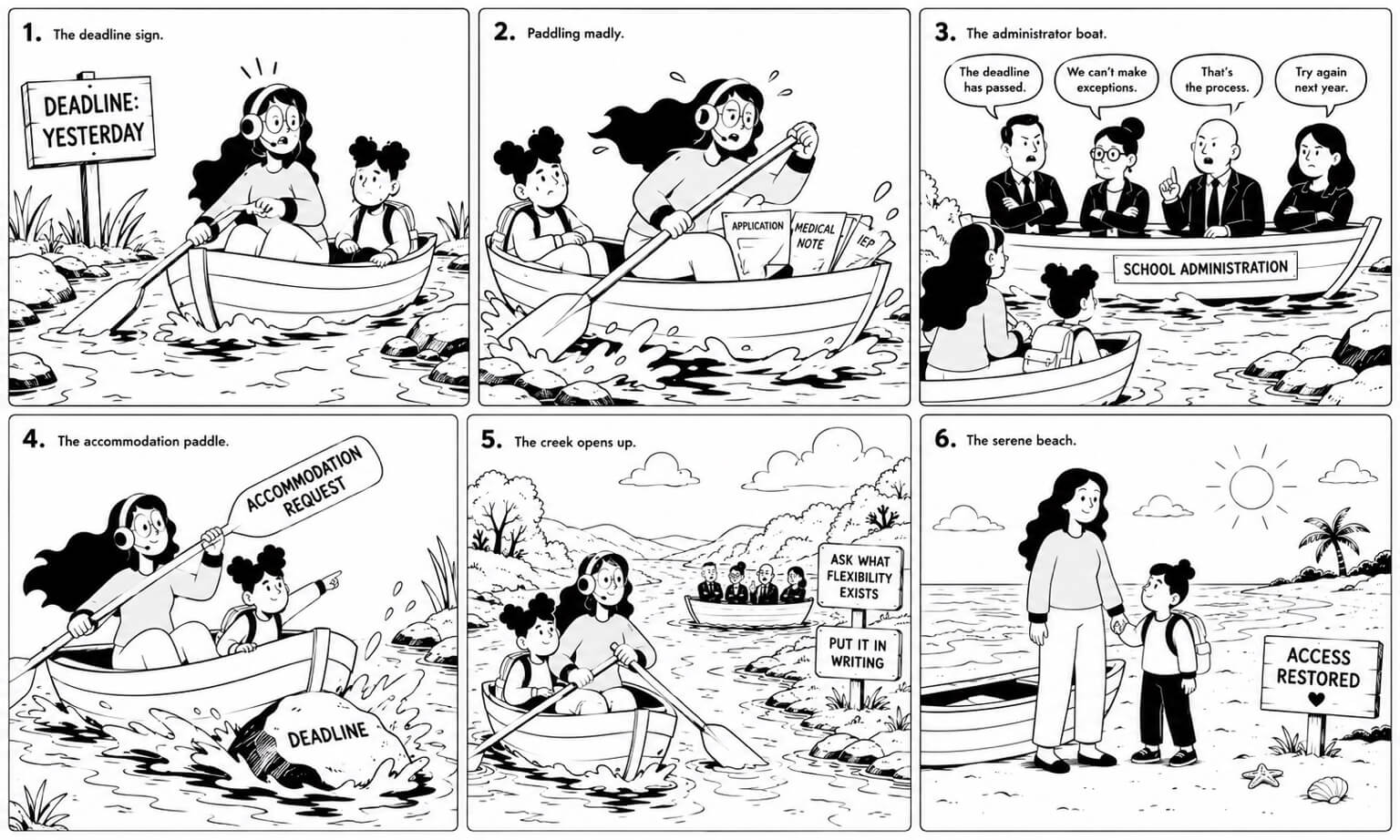
I missed a deadline. Am I up shit creek?
Missed a school deadline? Learn when BC families can ask for flexibility as a disability-related accommodation.

If district complaint/appeal processes are deeply flawed, what should I do?
It's a marathon, not a sprint. Understanding that these processes are largely not adequate and making sure you exhaust them quickly, is your best chance of finding relief. Treat every concern as if it may become formal later…

Is complaining worth it?
That is for you to decide. But the question deserves reframing. Most families arrive at this page already exhausted, already years into informal advocacy that has produced marginal improvement at extraordinary personal cost. They have attended the meetings,…
Is it lack of support or is it child abuse?
This page exists because the line between lack of support and child abuse is one that institutions have every incentive to keep blurred, and families have every right to examine clearly.

Is it normal for schools to ask parents to “work collaboratively” during serious harm?
“Collaboration” is often presented as a moral requirement, but it is not always appropriate — especially when serious harm is occurring. Collaboration assumes shared power and good faith. Many complaint situations involve neither. When a school controls information,…
Is it normal for the process to take this long?
Is it normal for the process to take this long? Delays are common, but they are not always legitimate. Extended timelines can themselves constitute a barrier to access, particularly when accommodation is time-sensitive or relates to a child's…