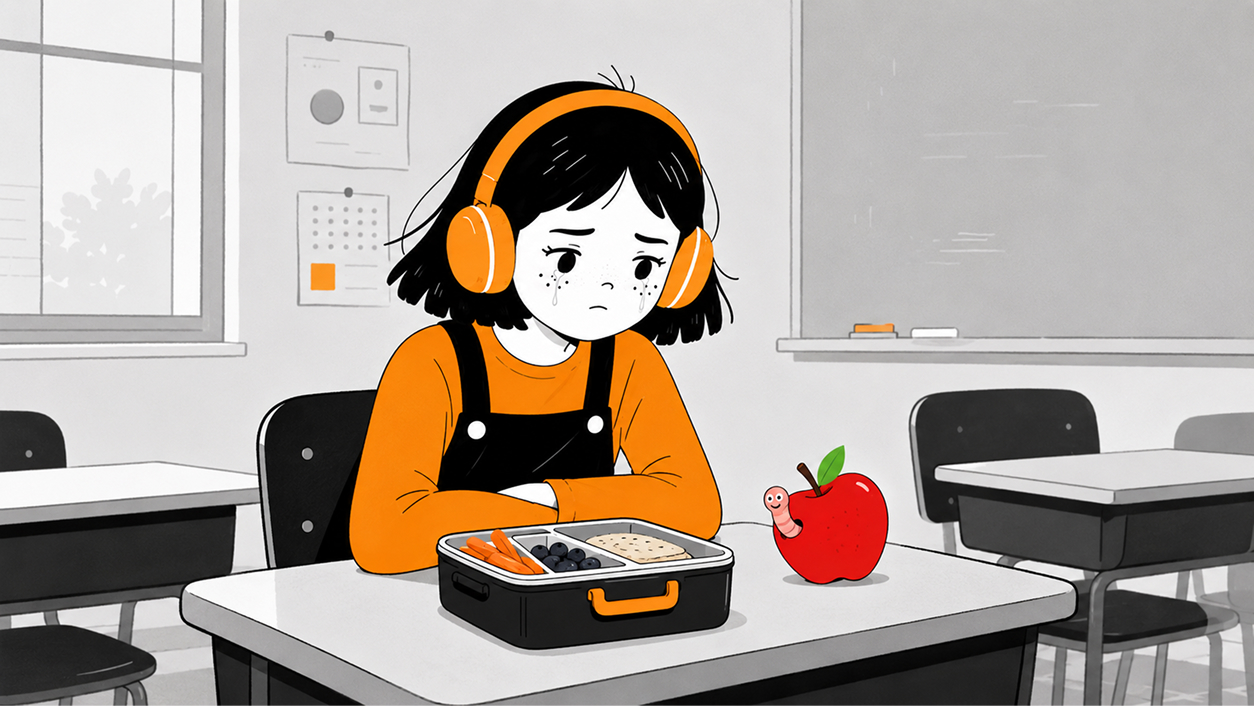
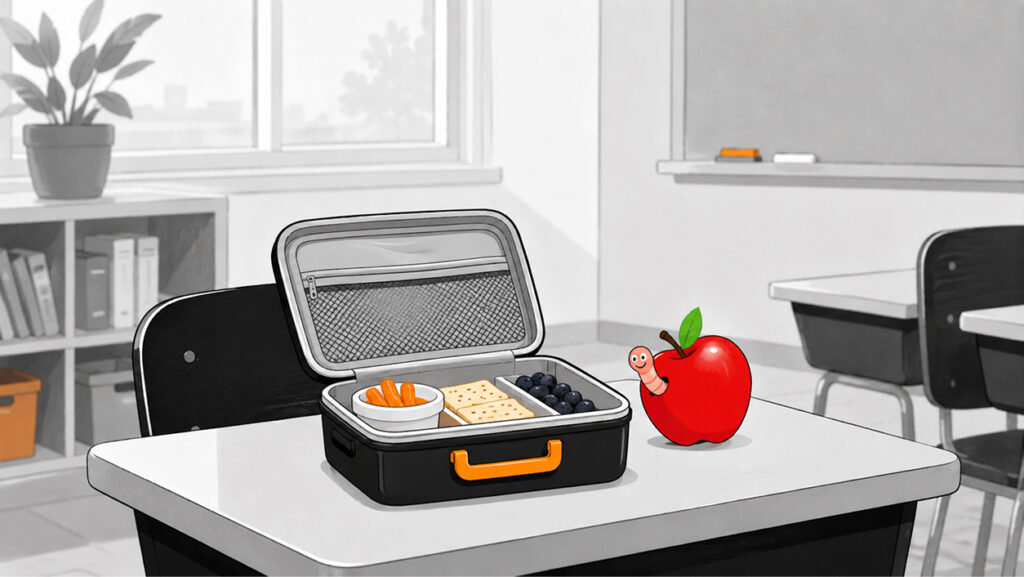
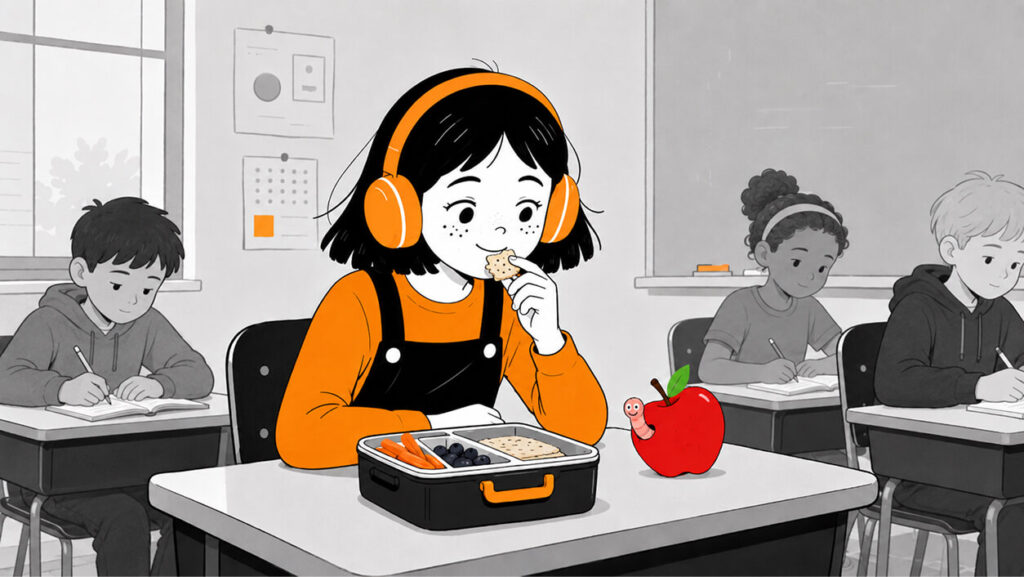
The lunch kit sits on the kitchen counter before anyone is awake, and inside it someone has built a small, careful architecture: the crackers that work this week, the one safe protein, the fruit cut precisely, the exact brand her body has agreed to trust. The snack bar and juice box her teacher called junk food.
This is what ARFID care looks like at home — precise, repetitive, a daily act of benediction. Better off fed than dead.
By the end of the day, the lunch comes home full.
The work that happens before the bell
Avoidant restrictive food intake disorder is a recognised medical diagnosis — a body’s narrow, hard-won agreement about what is safe to take in, shaped by sensory processing, anxiety, interoception, and the nervous system’s constant vigilance.
Packing the lunch is only the visible part. The rest of the work is the calibration that came before it: the trust built around safe foods, the timing that lets her eat while her body still feels safe, the quiet she needs to hear her own hunger cues.
Staff often hear the word eating and reach for picky, fussy, a phase — language with no clinical basis and real consequences, because it relocates a medical need into the territory of preference and willpower.
The gates
A school can take a simple accommodation — food within reach, all day — and thread it with so many small conditions that it stops functioning.
| What it sounds like | What it asks of the child |
|---|---|
| “She can ask when she’s hungry” | Initiate, self-advocate, and tolerate the attention |
| “She can eat at the back table” | Separate from peers and become visible doing it |
| “She can wait for snack time” | Override hunger and sit with the pain |
| “She can take a break outside” | Leave the learning to meet a basic need |
| “We’re building her stamina” | Treat medical access as a test of character |
At the desk
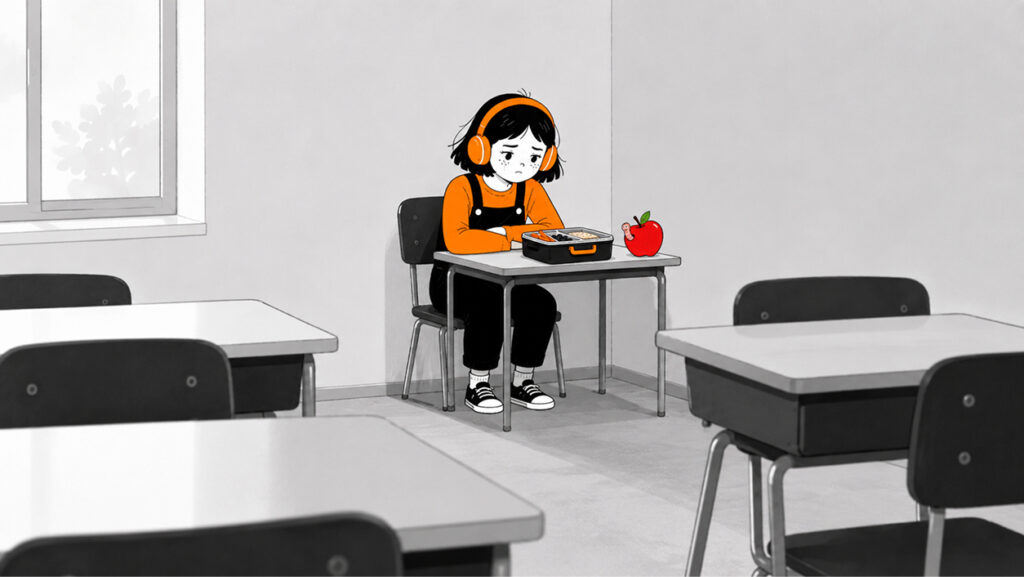
She sits at her desk with the lunch present and out of reach at the same time. She is hungry, and she is weighing that hunger against being seen: against raising a hand, against walking to the special table, against becoming, for a few minutes, that kid. So she stays still. She chews the inside of her cheek instead and picks at her hangnail. The harm here is quiet, which is exactly why adults miss it — there is no incident to log, no behaviour to name, only a girl going hungry in a room full of food.
When the help becomes the exclusion
The separate table is usually offered in good faith. A quiet corner, a calmer spot, somewhere the eating won’t distract. But the functional message lands hard: your body’s needs belong away from everyone else’s learning. An accommodation that buys the room’s comfort by making the child more visible, more separate, more ashamed delivers permission and calls it access.
Access that isolates is not meaningful access.
What she learns instead
Food is something I earn.
My hunger inconveniences the room. My body is too much for the classroom. Adults believe me once the damage can be measured.
She learns it fast.
What real accommodation looks like
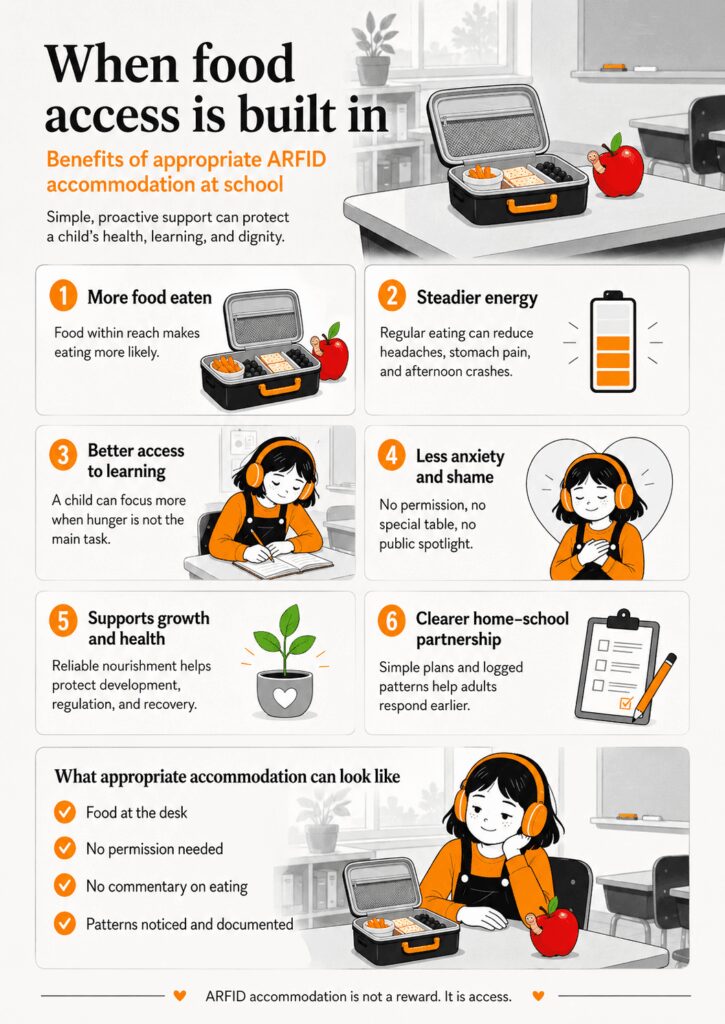
For a child with ARFID, support is concrete and it lives in the design of the day, not in the goodwill of whoever is on duty:
- Food at her desk, available throughout the day, eaten without asking permission first.
- Eating that draws no commentary on what, how much, or how often.
- A separate space only when she chooses it, and the classroom as the default.
- A discreet, agreed plan for replenishing safe foods, so a low day doesn’t become an empty afternoon.
- A trusted adult watching patterns rather than policing bites.
- Home and school communication about how the plan is working.
- Eating named, in writing, as health access: part of the medical accommodation.
Why a cracker matters
Eating a cracker can make the difference for some kids. A lunch kit within reach can prevent the stomach pain, the shutdown, the collapse in the car on the way home. Food eaten steadily through the day protects growth, energy, attention, attendance, and dignity.
If a child required a feeding tube, staff would understand that it was necessary. For children with ARFID, socialising the need for full-day access to food across a staff team is the accommodation that makes eating possible.
The whole ask
Children with ARFID need to eat when they feel hungry. It’s that simple. Creating the conditions that reduce anxiety, such as support with food preparation, a designated area to eat if preferred, eating with preferred classmates, et cetera is the ramp that make access possible for kids with ARFID.
Build the access into the architecture of the day, and eating turns ordinary again: food at her desk, in the room, among her peers, on terms her body can meet. That is the whole ask. It was always the whole ask.
Also see: Can a school take away my child’s ARFID eating accommodation?