

Home » About K12 complaints » Glossary
adversarial framing
Adversarial framing refers to a way of presenting or interpreting a conflict as a battle between opposing sides, where one party must be right and the other wrong. In education disputes, adversarial framing can occur when concerns raised by families are treated as accusations or challenges to authority rather than as opportunities to solve problems. This can shift the focus away from a child’s needs and toward defending positions, assigning blame, or protecting institutional interests. When issues are framed adversarially, communication often becomes more formal and defensive, and collaboration becomes harder. Parents may be labelled “difficult,” while schools may feel pressured to justify decisions rather than reconsider them. Recognising adversarial framing can help participants step back and refocus on shared goals—such as a student’s well-being and access to education—rather than viewing the situation as a conflict to be won or lost.
-

My child is being excluded from class: room clears and partial schedules
If your child is regularly sent home early, placed on a shortened day, or repeatedly left alone in a classroom while other children are moved out, they are being excluded from education. Schools in BC sometimes present these arrangements as support…
-

Why do schools sometimes respond defensively when parents document everything?
Documentation threatens ambiguity, and ambiguity protects institutions. When parents begin keeping clear records — dates, quotes, follow-ups — schools may shift tone. You might be labelled “adversarial” or “untrusting.” This response is about risk management, not your behaviour. Documentation is not…
-

Solving problems at school: discrimination and rights
This page addresses discrimination in BC schools on the basis of disability, race, gender, and other protected characteristics under the BC Human Rights Code, and the complaint pathways available when a school’s conduct crosses from policy failure into rights violation. Discrimination…
-

Solving problems at school: institutional harm patterns
This page addresses the patterns of institutional behaviour that compound the original harm — gaslighting, information withheld, goalpost shifting, advocacy punished as aggression, and tone policing — and the complaint pathways available when the system’s response to your concern becomes a…
-

Solving problems at school: punitive discipline and behaviour systems
This page addresses punitive discipline and behaviour management practices in BC schools, and specifically their impact on disabled and neurodivergent children, who bear a disproportionate share of their harm. When a school applies a behaviour system to a disabled child without…
-

Solving problems at school: accommodation and IEP failures
When a school fails to accommodate a disabled child, it rarely announces the failure plainly. The accommodation does not arrive; the IEP goal sits unimplemented through term after term; the education assistant’s hours are quietly reduced without consultation; the psychoeducational assessment…
-

Solving problems at school: exclusion and removal
Exclusion takes many forms in BC schools, and most of them have been given names designed to obscure what they are. A “gradual entry plan” is a partial schedule. A “room clear” is the isolation of a disabled child in an…
-
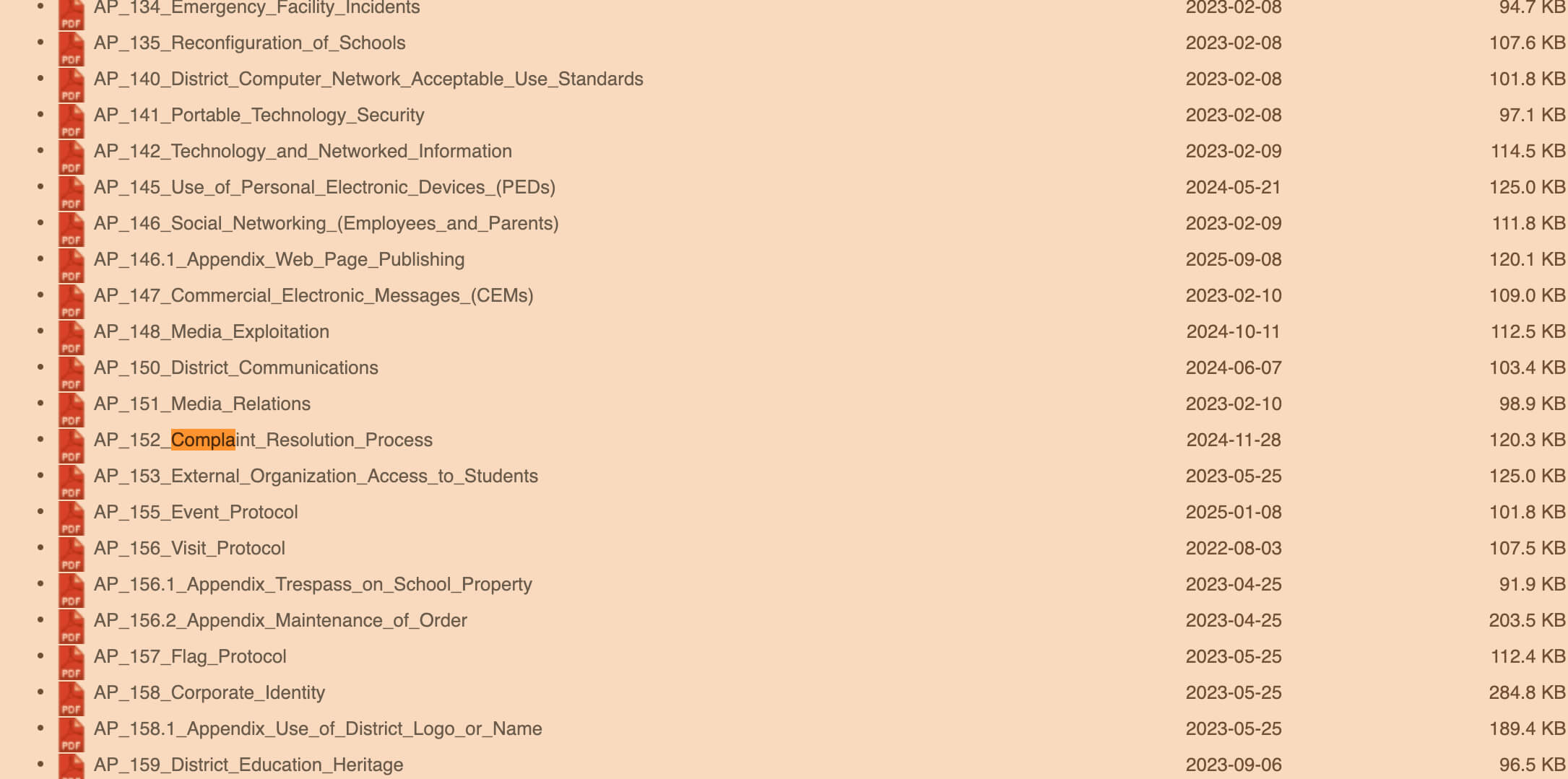
Making a complaint School District 73
If you’ve found yourself reading your district’s complaint policy, chances are you didn’t get here easily. Most parents arrive at this point after months — sometimes years — of trying to make things work informally. You’ve had meetings. You’ve been patient.…
-

How districts redirect—and how to stop them
When families request accommodation, districts rarely respond by addressing the child’s needs directly. Instead, they shift the focus. Each response often moves attention away from your child and toward institutional constraints, systemic limits, or behavioural justifications for denial. This redirection is…
-

How much do I have to collaborate with the school if they are hurting my child?
School districts often say you must collaborate or try to resolve concerns informally before you can file a formal appeal. They use words like working together, partnership, and informal resolution — even when a district decision is actively harming your child. This framing flips the situation on its head.The…