
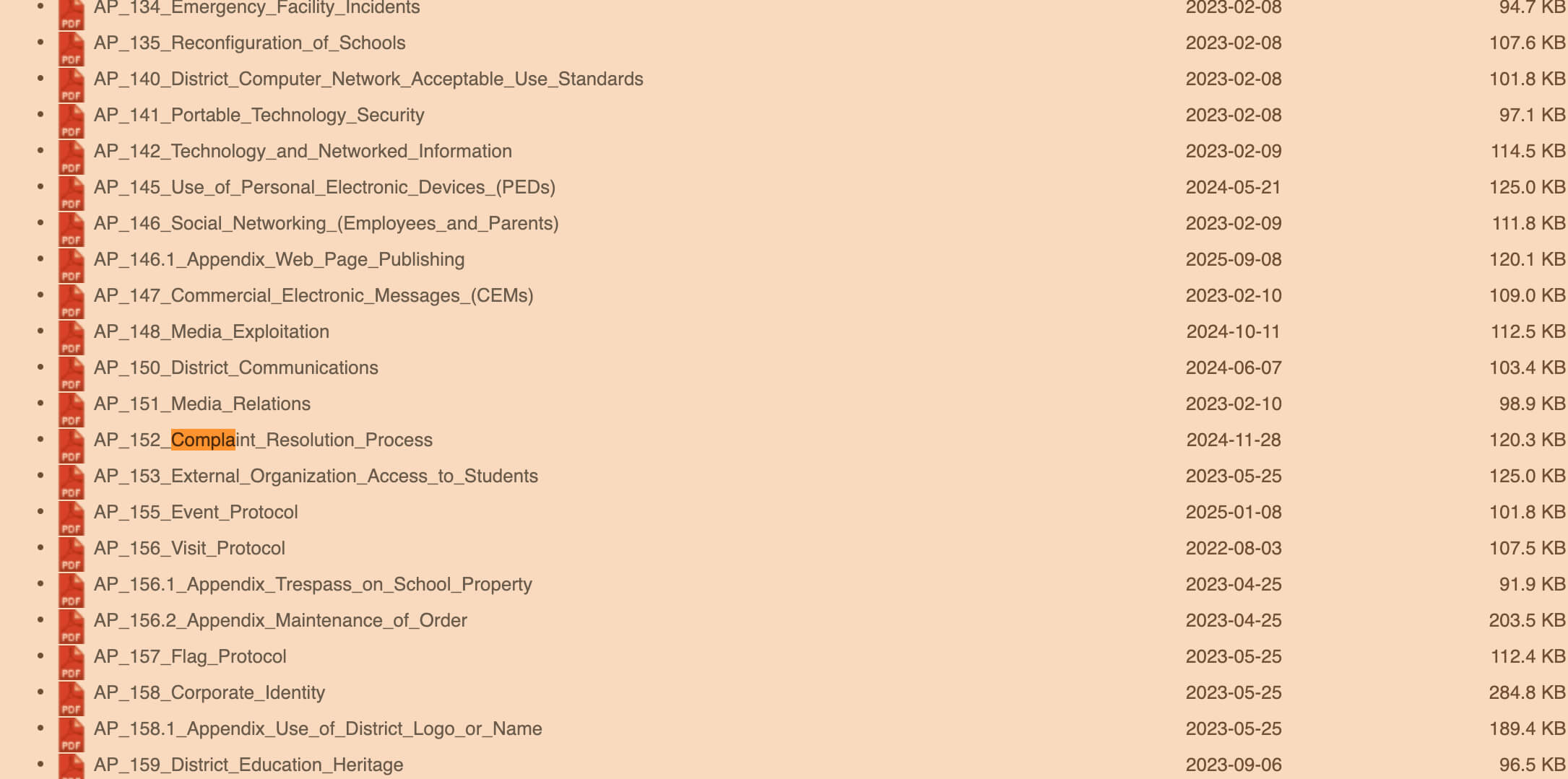
If you’ve found yourself reading your district’s complaint policy, chances are you didn’t get here easily. Most parents arrive at this point after months — sometimes years — of trying to make things work informally. You’ve had meetings. You’ve been patient. You’ve trusted the process. And something is still very wrong for your child.
So before we look at the policy itself, it matters to say this plainly:
The fact that you are here does not mean you are unreasonable, adversarial, or failing to collaborate.
It means your child’s rights are not being met, and the School Act gives you a pathway to challenge that.
This post looks at School District No. 73 (Kamloops–Thompson) Administrative Procedure 152: Complaint Resolution Process — not to discourage you, but to help you understand what you are walking into, and why it feels the way it does.
The sentence that often stops parents in their tracks
Early in the background section of AP 152, the district states:
“The District also places trust in its employees and desires to support their actions in a manner that frees them from unnecessary or unwarranted criticism and complaints.”
If you’re already overwhelmed, this line can feel like confirmation of your worst fear: that the system has already decided who it believes — and it isn’t you.
If that’s how it landed for you, you’re not overreacting.
Why this language is there at all
This sentence isn’t included because you are doing something wrong. It’s there because the School Act guarantees families the right to challenge decisions that significantly affect a student’s education, health, or safety.
In other words, complaint policies exist because parents can hold districts accountable.
What you’re seeing in this language is an institution managing that reality. The policy is doing defensive work — setting boundaries, slowing escalation, and reassuring staff — precisely because the law gives families leverage the district cannot ignore.
That doesn’t make the policy feel any less hostile. But it does reframe what’s happening.
You’re encountering structure, not personal judgment
When the policy talks about “unnecessary or unwarranted complaints”, it’s not making a finding about your concern. It’s establishing a general posture that treats complaints as something that must be filtered and managed.
This is why the process emphasises:
- handling issues “near the source”,
- multiple informal steps before escalation,
- tone, courtesy, and collaboration,
- and internal resolution by the same people who were involved in the original decision.
For parents, especially those advocating for disabled children, this can feel invalidating and exhausting. But it’s important to understand that this structure is not a response to your behaviour. It’s how the system protects itself from the implications of accountability.
Why this feels so much harder when your child is disabled
For disabled students, delay is not neutral. Waiting weeks or months for accommodation decisions to be reviewed can mean ongoing exclusion, reduced schedules, isolation, or disciplinary responses that compound harm.
Yet complaint procedures like AP 152 are built around institutional timelines and staff protection, not around children’s developmental needs. There is often no mechanism to pause harmful practices while a complaint is “under review”.
If you’re feeling panicked, angry, or desperate while reading this policy, that reaction makes sense. The system is not designed around urgency — even when urgency is warranted.
You are not failing because the process feels awful
Many parents internalise this stage as a personal failure:
- Maybe I’m not explaining it well enough.
- Maybe I need to be more patient.
- Maybe I’m being too emotional.
But what you’re experiencing is not a breakdown in communication. It’s a structural mismatch between a child’s immediate needs and a process designed to move slowly and defensively.
Understanding that distinction matters, because it changes what the “logical next step” is.
Why escalation exists — and why it’s allowed
The complaint process described in AP 152 is not the end of your options. The policy itself acknowledges external avenues, including:
- appeals under section 11 of the School Act,
- the Office of the Ombudsperson,
- and other external oversight bodies.
These pathways exist because internal processes are not always capable of correcting harm on their own. Using them is not hostile. It is not a failure to collaborate. It is part of the accountability structure the law intentionally created.
If internal steps are not producing change within timelines that matter for your child, escalation is not an overreaction. It is a proportionate response.
What we want you to take from this
If this policy made you feel small, doubted, or discouraged, we want to be very clear:
- You are not imagining the tone.
- You did not cause the hostility you’re sensing.
- This policy exists because you have rights, not because you are a problem.
- And you are allowed to move beyond internal processes when they are not working.
Understanding how these policies function is not about giving up. It’s about helping you make informed decisions that protect your child — and yourself — from prolonged harm.
You are not asking for too much.
You are encountering a system that was never designed with your urgency in mind.
And knowing that changes everything.