

Home » About K12 complaints » Glossary
complaints!
This section looks at school district complaint processes from a family perspective. We analyse district policies, explain escalation pathways, and name the structural reasons complaints often feel exhausting rather than corrective. It’s for parents navigating harm, delay, or exclusion who need clarity about what complaint systems are designed to do — and when it makes sense to move beyond them.
-

Solving problems at school: punitive discipline and behaviour systems
This page addresses punitive discipline and behaviour management practices in BC schools, and specifically their impact on disabled and neurodivergent children, who bear a disproportionate share of their harm. When a school applies a behaviour system to a disabled child without…
-
Solving problems at school: accommodation and IEP failures
When a school fails to accommodate a disabled child, it rarely announces the failure plainly. The accommodation does not arrive; the IEP goal sits unimplemented through term after term; the education assistant’s hours are quietly reduced without consultation; the psychoeducational assessment…
-
Solving problems at school: exclusion and removal
Exclusion takes many forms in BC schools, and most of them have been given names designed to obscure what they are. A “gradual entry plan” is a partial schedule. A “room clear” is the isolation of a disabled child in an…
-

A parent’s complaint guide for BC schools: when to push and when to escalate
Every parent who has sat across a table from a principal and left the meeting with nothing resolved, or who has spent three weeks drafting a letter that generated a two-line reply, knows the particular exhaustion of advocacy that moves without…
-
BC’s Office of the Human Rights Commissioner — educational sessions
BC’s Human Rights Commissioner periodically hosts free 90-minute webinars on topics like: These are not legal advice but good background on what rights you have under BC law. Learn more
-

BC Human Rights Clinic — online workshops & videos
The BC Human Rights Clinic regularly offers workshops, training, and recorded webinars about: These resources are practical and directly connected to legal help organisations that assist complainants. Learn more
-

Five complaint architectures in BC schools
If you read one district’s complaint policy, it can seem reasonable. If you read sixty of them, the reasonableness starts to fracture into something more recognisable: a set of structural patterns, repeated with minor variation across the province, each producing a…
-
Making a complaint School District 73
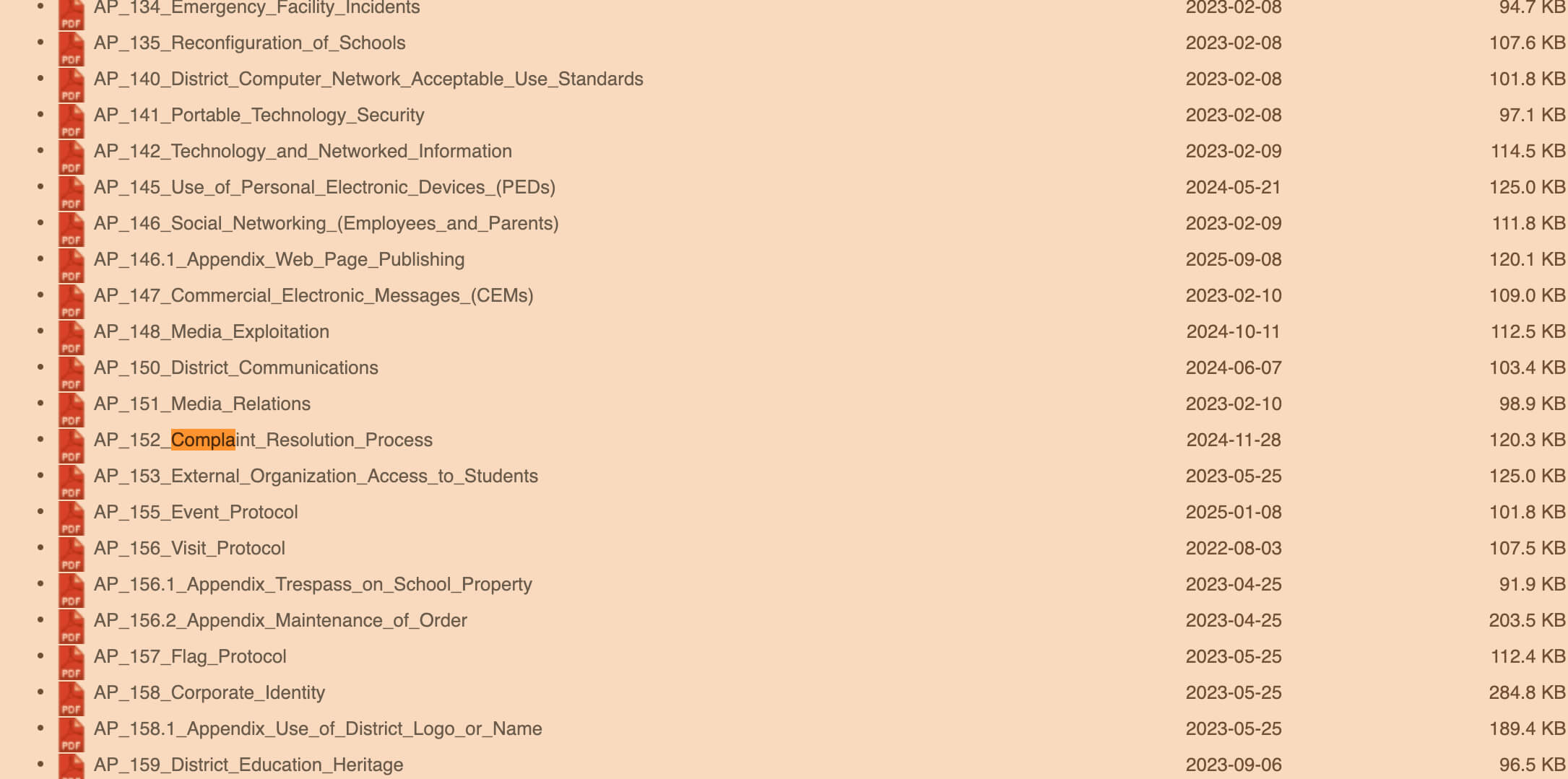
If you’ve found yourself reading your district’s complaint policy, chances are you didn’t get here easily. Most parents arrive at this point after months — sometimes years — of trying to make things work informally. You’ve had meetings. You’ve been patient.…
-
How much do I have to collaborate with the school if they are hurting my child?
School districts often say you must collaborate or try to resolve concerns informally before you can file a formal appeal. They use words like working together, partnership, and informal resolution — even when a district decision is actively harming your child. This framing flips the situation on its head.The…
-
It’s existential
The first two pieces in this series were about structure — how grievance processes are designed to protect institutions, how remedies close complaints instead of fixing harm, and how retaliation works through tone policing, slow responses, and conflicts of interest. See: This piece…