
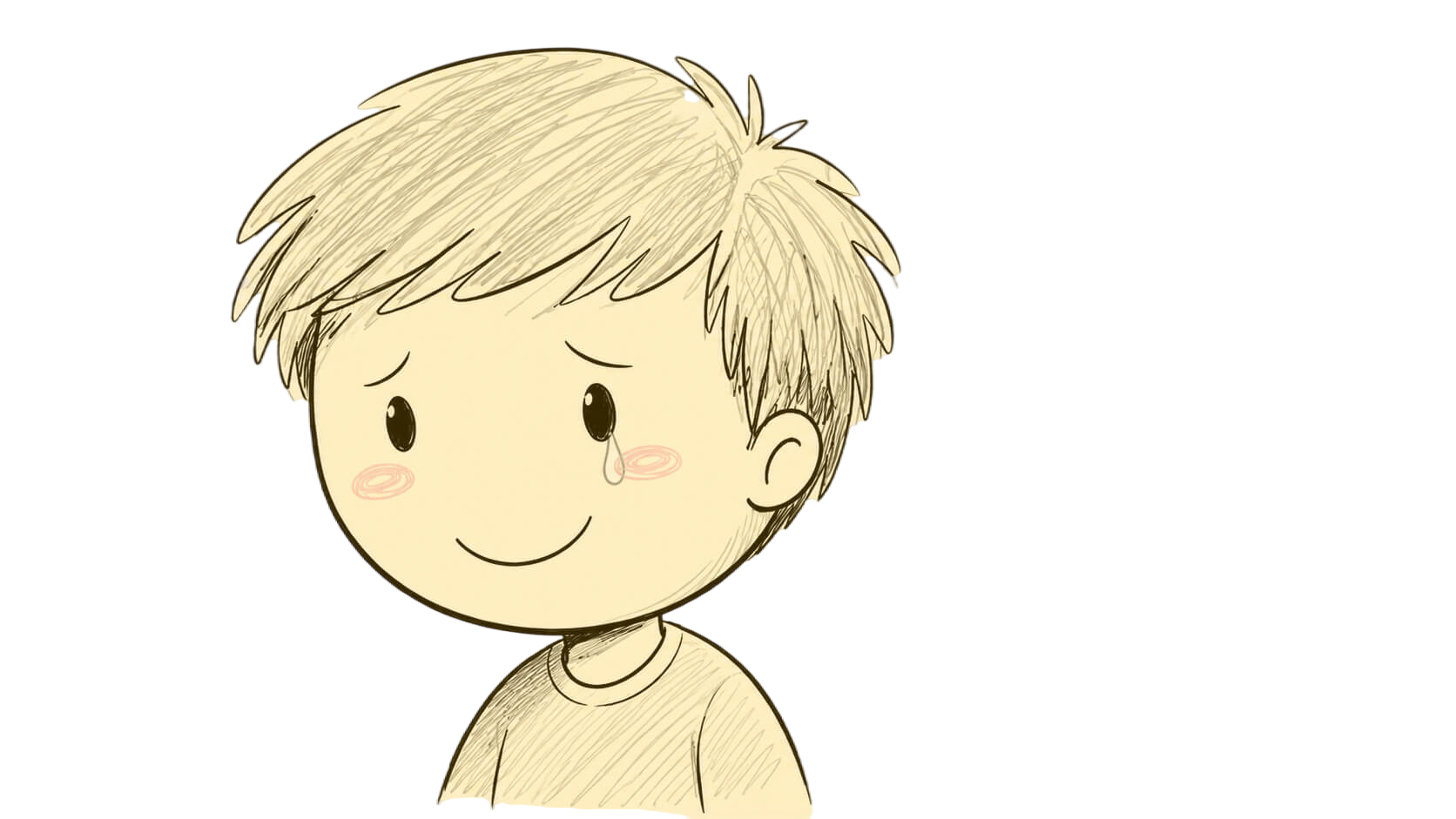
There is a saying many of us heard as children:
If you don’t have anything nice to say, don’t say anything at all.
For some children, that may land as a reminder not to be cruel. But for many disabled children, it can become something much heavier: a rule that truth is only welcome when it is pleasant, grateful, cheerful, or easy for adults to hear.
I heard that message as a child. Often, I did not say anything at all. But silence did not mean I had no feelings. It did not mean I agreed. It did not mean I was fine. It meant I had learned that some parts of my inner life were unacceptable in the room.
That is one of the quiet harms of toxic positivity. It can make children disappear while they are still sitting right in front of us.
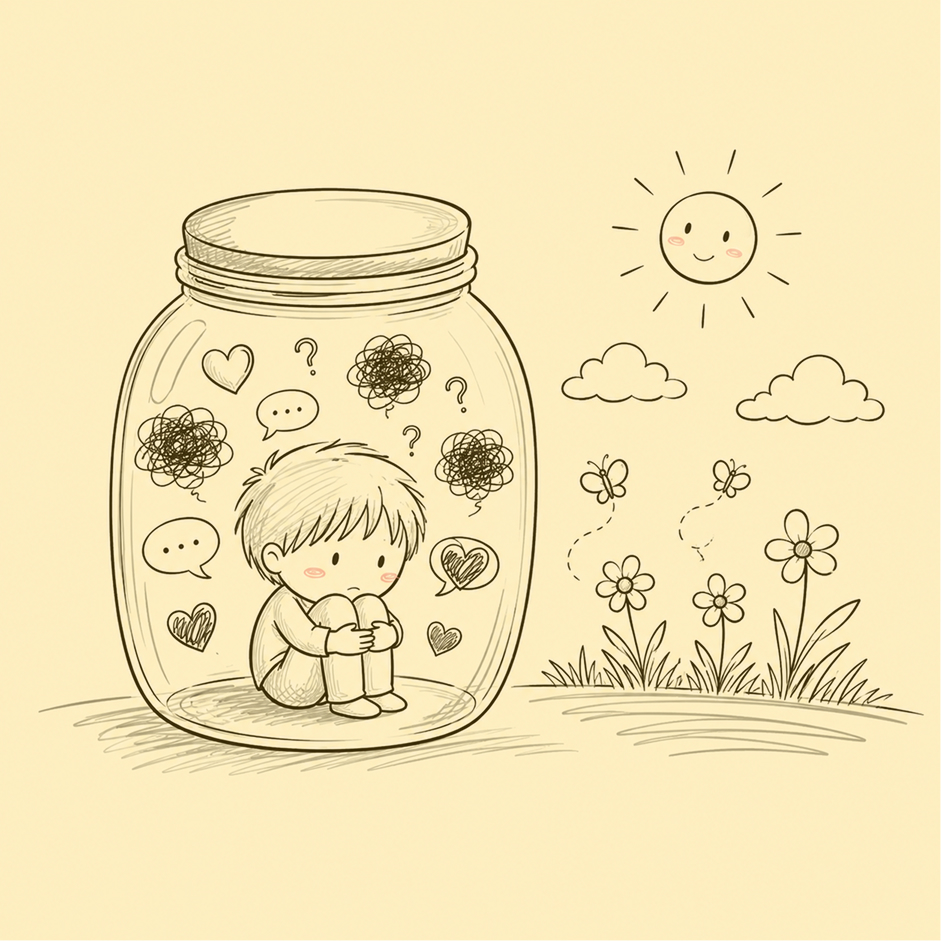
What toxic positivity looks like in schools
Toxic positivity is not the same as hope. It is not kindness, encouragement, humour, warmth, or helping a child find their way through something hard.
Toxic positivity is what happens when adults insist on a positive frame even when a child is trying to communicate distress, pain, fear, overload, injustice, or confusion. It can sound gentle. It can even sound supportive. But underneath, the message is often: Your reality is too uncomfortable, so please make it easier for us.
In schools, it can sound like:
| Adult language | What a disabled child may hear |
|---|---|
| “Let’s focus on the positive.” | “The hard parts are not welcome here.” |
| “You’re fine.” | “Your body is wrong.” |
| “Use kind words.” | “Your distress only counts if it sounds polite.” |
| “Don’t be negative.” | “Your reality is the problem.” |
| “Look on the bright side.” | “I do not want to hear what is hurting you.” |
| “Everyone has to do things they don’t like.” | “Your disability-related barrier is just an attitude problem.” |
The problem is not positivity itself. The problem is positivity used as a substitute for curiosity, accommodation, repair, or accountability.
Disabled children do need hope. They need adults who believe things can improve. But hope is very different from denial. Hope says, This is hard, and we will not leave you alone in it. Toxic positivity says, Please stop making this hard to look at.

Forced positivity is still a demand
For many disabled children, especially children with anxiety, autism, ADHD, sensory differences, trauma histories, burnout, or demand resistance, “be positive” is not a neutral request. It is another demand layered on top of an already inaccessible situation.
The child is not only being asked to complete the work, enter the classroom, tolerate the noise, manage the transition, sit in the group, eat in the cafeteria, write the paragraph, or stay in the assembly. They are also being asked to perform being okay.
They may be expected to regulate their body, hide their fear, soften their tone, protect the adult’s feelings, choose acceptable words, and make the environment look more successful than it feels.
The demand is no longer simply, Come into the classroom.
It becomes: Come into the classroom, do not show how hard this is, reassure the adults that the plan is working, and express any distress in a way that does not disturb the story of inclusion.
That is a lot to ask of a child!!!
For children with demand resistance, forced positivity can make things worse because it turns emotional expression itself into a compliance task. The child may already be struggling with the original demand. Then adults add another one: Feel differently. Sound different. Look more willing. Make this easier for us.
No wonder some children shut down, refuse, bolt, swear, cry, mask, or explode. The adult may see “attitude”. The child may be drowning in layered demands.
Masking is often mistaken for coping
Toxic positivity rewards children who can hide distress and punishes children who cannot.
A child who smiles, complies, and falls apart at home may be described as successful at school. A child who says “I hate this”, refuses to enter the room, cries during transitions, or pushes back against a demand may be treated as the problem.
But masking is often mistaken for coping.
| What adults may see | What may actually be happening |
|---|---|
| The child is quiet | The child has shut down |
| The child smiles | The child is masking distress |
| The child says “okay” | The child has learned disagreement is unsafe |
| The child behaves all day and explodes at home | The child used all their capacity at school |
| The child refuses to talk | The child may have no safe way to say the truth |
| The child is “negative” | The child may be the only person naming the barrier |
This matters because schools often rely on visible distress to decide whether support is needed. But some disabled children are trained, directly or indirectly, to hide the very evidence adults say they need before they will act.
Then, when the child collapses at home, refuses school, develops panic, loses trust, or cannot attend, adults may say the problem came “out of nowhere”.
It did not come out of nowhere. It may have been there all along. It was just being managed by the child instead of witnessed by the adults.
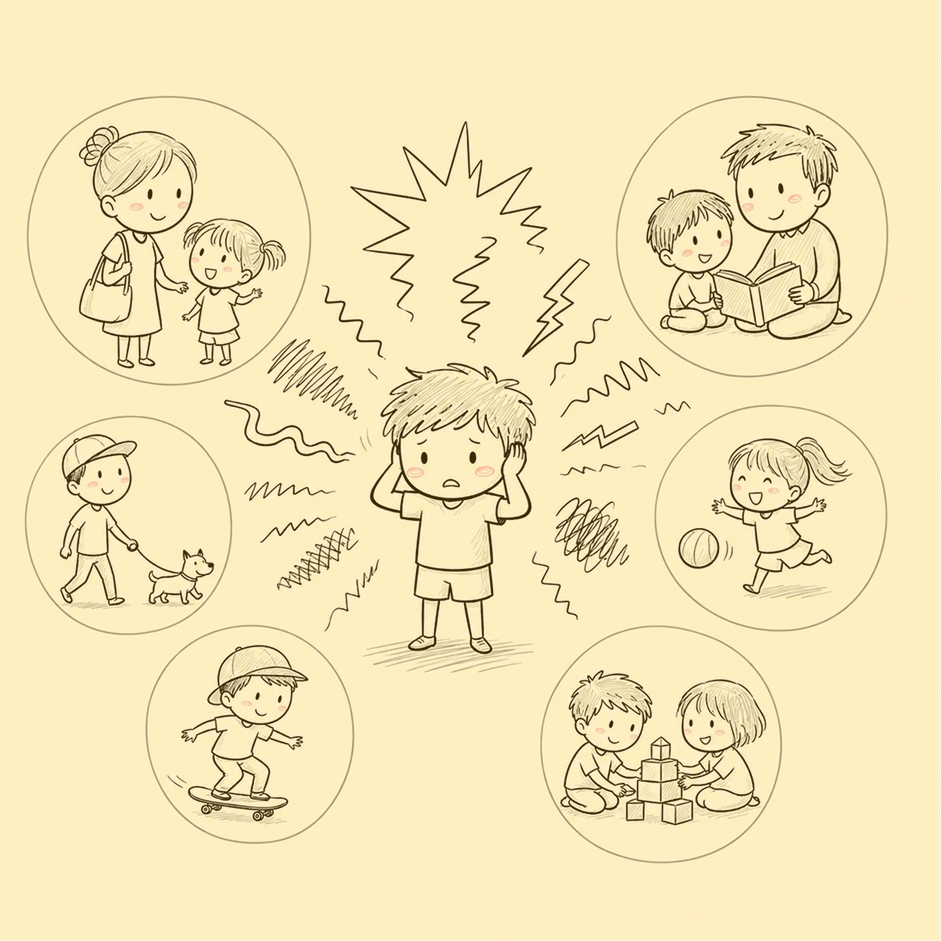
The witnessing deficit
Many disabled children live with what we might call a witnessing deficit.
Disabled children may experience the world differently because of sensory processing, communication differences, motor differences, anxiety, trauma, interoception, social processing, pain, fatigue, or other disability-related realities. They may notice things other people miss. They may be overwhelmed by things other people barely register. They may experience a classroom, hallway, playground, bus, group project, or adult tone in a way that is real but not widely shared.
That can make a child feel out of sync.
The lights are too bright, but everyone else says they are fine. The room is too loud, but everyone else keeps working. The teacher’s tone feels scary, but other adults say the teacher is kind. The social situation feels unsafe, but other children call it joking. The assignment feels impossible, but adults say it is easy. The child’s body is signalling danger, but trusted adults say, “You’re okay.”
Over time, this can become destabilising. A child may begin to doubt their own perception. They may learn that what they feel, notice, hear, fear, or know inside their own body only becomes real when someone else agrees.
This is why witnessing matters so much.
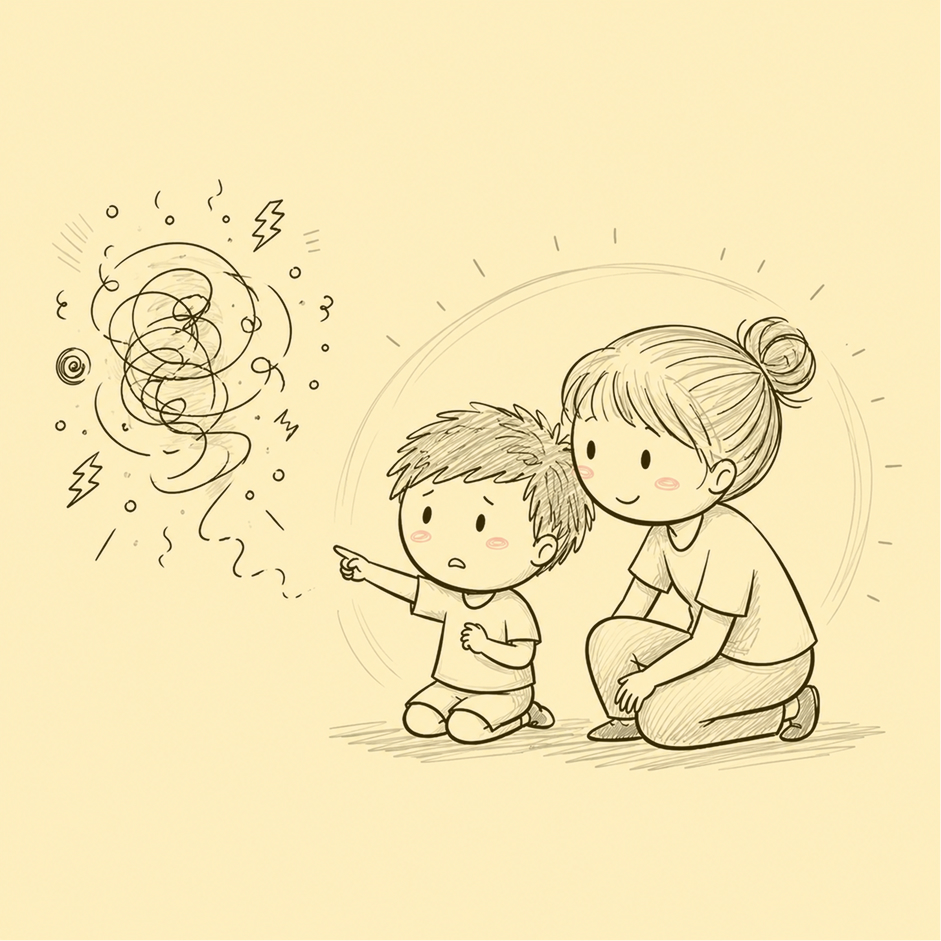
When a trusted adult says, “Yes, I see what you mean,” or “That makes sense,” or “I believe you,” they are not just being nice. They are helping the child stay connected to their own reality.
That is a safety issue.
A child who is rarely witnessed may become desperate for the feeling of alignment. If the adults closest to them repeatedly minimise, dismiss, or reframe their perceptions, the child may become more vulnerable to anyone who finally validates them, even if that person is not safe. The hunger to be believed is powerful. The relief of having someone agree with your assessment of a situation can feel like rescue.
This does not mean adults should automatically agree with everything a child says. It means adults need to take children’s perceptions seriously enough to investigate, reflect, and respond. A child can misunderstand a situation and still need help. A child can use intense language and still be communicating something true. A child can be dysregulated and still be giving adults important information.
Witnessing does not require adults to abandon judgement. It requires adults to stop treating disabled children’s perceptions as problems to manage before they have been understood.
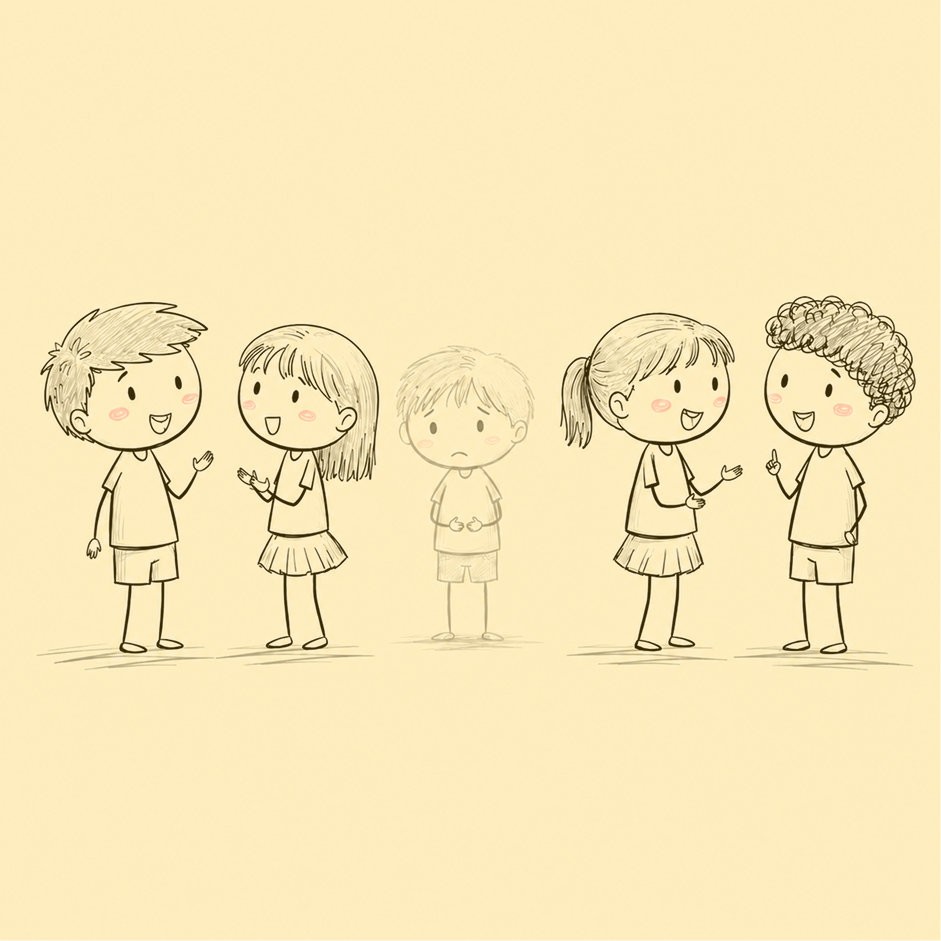
When children are always out of sync
Some children move through school feeling as though everyone else has access to a script they were not given.
Other children seem cheerful when they are overwhelmed. Other children seem relaxed when they feel watched. Other children seem to understand the rules of friendship, tone, classroom humour, group work, or “just try your best”. Other children seem able to tolerate noise, fluorescent lights, scratchy clothes, unexpected changes, competitive games, public correction, and the strange emotional weather of school.
The disabled child may not be trying to be negative. Their inner experience simply does not match the emotional script around them.
If adults insist that the correct response is positivity, the child may draw a painful conclusion: The world is fine. Everyone else is fine. I am the problem.
That is how toxic positivity can become shame.
The child may learn to stop saying, “This hurts.” They may stop saying, “I don’t understand.” They may stop saying, “I don’t feel safe.” They may stop saying, “I can’t do this.” They may stop saying anything at all.
But silence is not consent. Compliance is not wellbeing. Politeness is not proof of access. A child who has learned to stop objecting may simply have learned that objection costs too much.
Negative feelings are information
One of the most harmful effects of toxic positivity is that it teaches adults to treat negative feelings as behaviour problems instead of information.
A child says, “I hate school.”
An adult says, “Don’t say that. School is important.”
A child says, “That teacher is mean.”
An adult says, “Use respectful language.”
A child says, “I can’t do this.”
An adult says, “Have a growth mindset.”
A child says, “Nobody likes me.”
An adult says, “That’s not true. Lots of people like you.”
Each adult response may be well intended. But each one closes a door.
What if “I hate school” means the child is overwhelmed every day by noise, uncertainty, social stress, or repeated failure?
What if “that teacher is mean” means the child experiences that adult’s tone, pace, or public correction as frightening?
What if “I can’t do this” means the task is inaccessible because of handwriting, working memory, initiation, motor planning, language processing, perfectionism, or shame?
What if “nobody likes me” means the child is socially isolated in ways adults have not bothered to map?
Negative feelings are not automatically problems to correct. Sometimes they are the clearest evidence adults have that something in the environment is not working.
Adult comfort is not the goal
Toxic positivity often protects adults from discomfort more than it protects children from harm.
When a child names something painful, adults may feel accused, helpless, defensive, or overwhelmed. It is uncomfortable to hear that a child hates school, feels unsafe, is exhausted by participation, or experiences an inclusion plan as unbearable.
Positivity gives adults an escape route. They can redirect, reframe, praise, minimise, or move on.
But a child’s distress does not become less real because adults find it hard to hear. A child’s disability-related barrier does not disappear because it disrupts the preferred story. A child’s fear, shame, anger, or refusal may be inconvenient, but it may also be accurate.
Inclusion cannot depend on disabled children making adults feel successful.
If a child has to mask distress for the plan to look good, the plan is not working. If a child has to perform gratitude for partial access, the environment is still controlling the child’s truth. If adults only accept feedback when it is polite, positive, and easy to hear, then the most vulnerable children may be the least able to report harm.
What schools can say instead
The alternative to toxic positivity is not hopelessness. It is honest support.
Children do not need adults to collapse into despair with them. They need adults who can stay present when the truth is uncomfortable.
| Instead of | Try |
|---|---|
| “Be positive.” | “You can tell me the hard part.” |
| “Don’t be negative.” | “I can hear that this feels bad.” |
| “You’re okay.” | “Your body is telling us something.” |
| “Use nice words.” | “I’ll help you make this safer to say.” |
| “Everyone has to do hard things.” | “Let’s figure out whether this is hard, inaccessible, unsafe, or unsupported.” |
| “Look on the bright side.” | “We can hold the hard thing and still look for a way through.” |
| “That’s not true.” | “Tell me what makes it feel that way.” |
| “You need a better attitude.” | “Something about this is not working yet.” |
This is not about letting children be cruel or unsafe. Children can still need support to communicate in ways that do not harm others. But communication support should not become truth suppression. Adults can help a child find safer words without rejecting the reality underneath the words they already used.
Questions parents can ask
When a school relies heavily on positivity, resilience language, mindset language, or “strength-based” framing, parents may need to ask what is being missed.
Useful questions include:
- Is my child being expected to appear okay before adults believe they are okay?
- Is distress being treated as misbehaviour instead of information?
- Does the plan require my child to mask, comply, or self-advocate beyond their capacity?
- Are adults dismissing home-based collapse because my child “seems fine” at school?
- What negative feelings has my child expressed, and what has the school done with that information?
- Is “positive language” being used to avoid naming barriers, harm, exclusion, bullying, restraint, seclusion, or lack of support?
- Does my child have a safe way to express refusal, fear, confusion, pain, or overwhelm?
- Who at school consistently witnesses my child’s perception and helps make sense of it without immediately correcting it?
- When my child says something feels wrong, what is the process for checking whether they are right?
- Is the school more focused on my child sounding regulated than on understanding why they are distressed?
These questions matter because disabled children often spend their days being interpreted by adults. If the adults around them are committed to a positive story, they may miss the child’s actual one.
Children need truth with support
There is nothing wrong with helping children notice joy, possibility, humour, beauty, connection, or pride. Disabled children deserve all of that. They deserve more than crisis language, deficit language, and constant problem-solving.
But they also deserve room for the truth.
They deserve to say when something hurts. They deserve to say when something is too loud, too fast, too confusing, too humiliating, too unpredictable, or too much. They deserve adults who understand that refusal may be communication, silence may be survival, and “negative” feelings may be the first honest clue.
A child who does not have anything nice to say may still have something important to say.
And if adults only make room for the nice parts, the child may learn to disappear into politeness, masking, shutdown, or shame.
Children do not need every conversation to be positive. They need enough safety for the truth to enter the room. Hope is not built by asking disabled children to hide the cost of participation. It is built when adults can hear, without punishment, that something hurts, something is not working, or something needs to change.