

There is a version of “good parenting” that school systems often reward.
It looks calm. Cooperative. Grateful. Patient. It attends the meetings, reads the reports, accepts the explanations, and tries one more strategy. It keeps the relationship warm. It softens the email. It gives the school more time. It encourages the child to go back tomorrow, even when the child’s body is saying, clearly and repeatedly, that something is wrong.
For parents of disabled children, this version of good parenting can become a trap.
Not because collaboration is bad. Not because school staff are always acting in bad faith. Not because every disagreement needs to become a formal complaint. But because many families are slowly trained to protect the relationship with the school more carefully than the school is protecting the child’s access, dignity, or safety.
This is how institutional capture works.
Institutional capture happens when people who are being harmed by an institution begin using that institution’s own language, priorities, and measures to understand the harm. You do not have to agree with the school to be captured by its framework. You only have to depend on it.
You depend on the school for information. For access. For support. For documentation. For your child’s daily safety. For the continuation of a relationship you cannot afford to lose. So you learn the language. You speak it back. You say “dysregulated” instead of overwhelmed. You say “unexpected behaviour” instead of distress. You say “successful day” before asking successful for whom.
You begin to track your child through the school’s categories: good day, bad day, regulated, unregulated, compliant, non-compliant, safe body, unsafe body, expected behaviour, unexpected behaviour.
The framework does not need your consent. It only needs your participation.

The good parent keeps the fiction alive
The “good” parent in this system is often the parent who helps keep the child inside an arrangement that is not working.
She attends the meeting. She thanks everyone for their time. She asks careful questions and receives vague answers politely. She does not say, “My child is deteriorating.” She says, “We are seeing some challenges at home.” She does not say, “This plan is not being implemented.” She says, “I just wanted to check in.” She does not say, “This is exclusion.” She says, “I understand staffing is difficult.”

Then she goes home and manages the fallout.
The school day ends, but the school’s impact does not. It comes home in the child’s body: the after-school collapse, the rage, the shutdown, the refusal, the stomach aches, the Sunday-night dread, the child who holds it together all day and then falls apart where it is finally safe.
It comes home in the parent’s body too: the hypervigilance, the dread of pickup, the constant checking of email, the careful drafting of messages, the replaying of meetings, the fear that one wrong tone will make things worse.
The home becomes an annex of the school. The family becomes the place where the system’s failures are absorbed.
And still the parent is expected to send the child back.
Not because the child is thriving. Not because the support is working. But because attendance itself becomes proof that the situation is manageable. If the child keeps showing up, the system can continue to call the arrangement inclusion.
That is the fiction the good parent is asked to maintain.
A balancing act
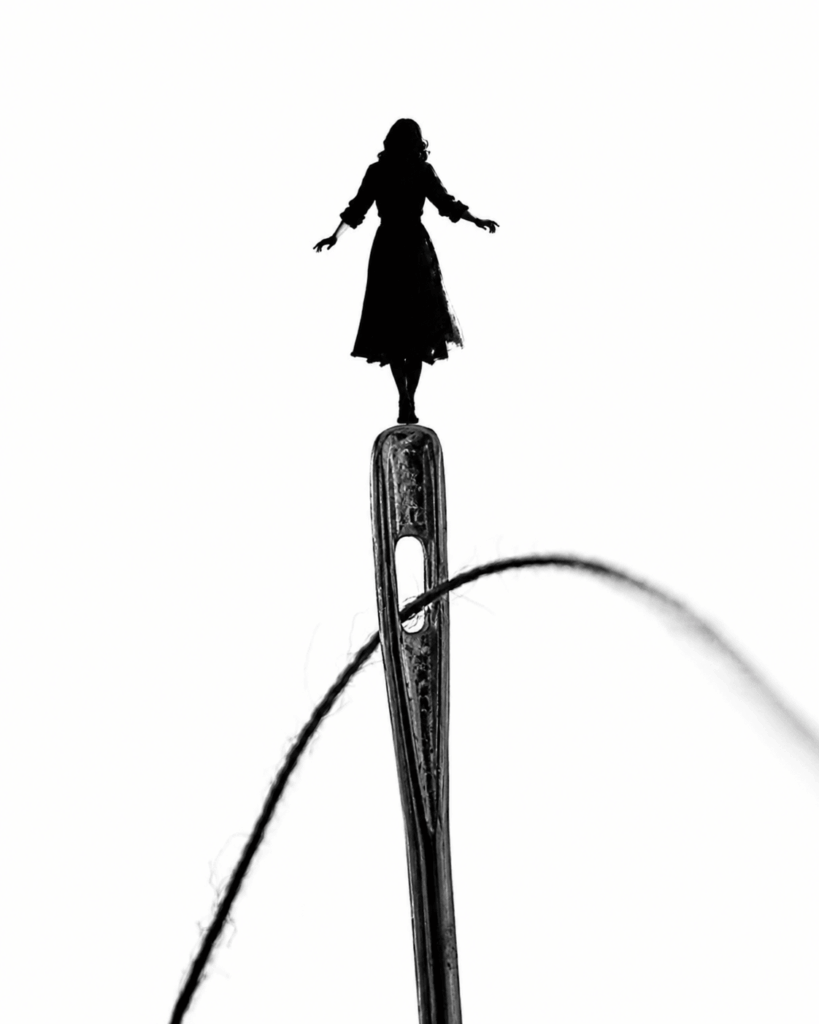
At first, the place the school wants you to occupy is wide enough to stand on.
There is still room to believe the next meeting will help. The new IEP will be clearer. The new strategy will stick. The new staff member will understand. The district person will see the pattern. The school just needs more information, more time, more collaboration.
So you try harder.
You document, but gently. You raise concerns, but softly. You ask for support, but with gratitude attached. You learn to sound reasonable while describing unreasonable things.
Each small failure narrows your foundation.
A promise is not followed through. A support is listed but not delivered. A child is sent home early. A reduced day is presented as temporary. A behaviour plan focuses on the child’s reactions but not the conditions producing them. A meeting is held, but the decision has already been made. A parent’s concern is heard, acknowledged, and then functionally ignored.
No single cut is treated as enough.
Each one has an explanation: staffing, safety, complexity, transition, misunderstanding, resources, process. Each explanation may sound plausible on its own. But the pattern is the point.
Death by a thousand cuts can look exactly like support until you are bleeding from a thousand places.
That is why institutional capture is so hard to identify from inside it. You are kept busy responding to each cut individually. This incident. That email. This meeting. That form. This new plan. That new timeline.
A parent balanced precariously has very little room to escalate. She is too busy not falling.
When collaboration becomes containment
Families are often told to keep things informal as long as possible.
Keep meeting. Keep talking. Keep trying. Keep the relationship positive. Give the school a chance to respond. Assume good intentions. Work as a team.
There is nothing wrong with respectful communication. But informal resolution can become a containment strategy when it absorbs parent energy without changing the conditions for the child.
A meeting is not accountability. A listening ear is not implementation. A warm tone is not accommodation. A promise to “monitor” is not a plan. A plan that exists on paper but does not change the child’s day is not support.

Many parents stay in informal advocacy because they believe they have to earn the right to escalate. They think they must prove they were patient enough, cooperative enough, reasonable enough, grateful enough. They worry that filing a complaint will damage the relationship with the school.
But a relationship that depends on a parent staying quiet about harm is not a safe relationship.
The relationship worth protecting is not the one where the school feels comfortable. It is the one where the child is safe, supported, and able to access education without being worn down by the process.
If informal advocacy is producing meetings instead of remedies, the problem is not that the parent has failed to collaborate. The problem is that collaboration is being used as a substitute for accountability.
The autistic mother’s trap
For autistic mothers, this trap can be especially precise.
Many of us have spent a lifetime learning how to perform acceptability inside institutions. We know how to read the room. We know how to suppress visible distress. We know how to make ourselves useful, articulate, and calm enough to be tolerated. We know how to translate pain into information other people can receive.
School advocacy rewards that performance.
The calm mother is credible. The organised mother is useful. The mother who can describe harm without sounding harmed is easier for the institution to hear. The mother who keeps returning to the table, keeps adjusting her tone, keeps trying to find the missing phrase that will finally make people understand, is treated as collaborative.
The problem is that the same survival skill can be used against her child.
A parent who has survived by overriding her own signals may be slow to trust her child’s. She may think endurance is preparation. She may believe that teaching a child to tolerate the intolerable is love, because that is what she was taught. She may not yet know that her own lifelong discomfort was data, not weakness.
So when the school says the child needs to build resilience, she may believe it.
When the school says the child needs to self-regulate, she may help.
When the school says the child had a successful day because they stayed quiet, she may feel relief.
When the child collapses at home, she may see that as the cost of getting through the day rather than evidence that the day itself is causing harm.
This is not parental failure. It is inherited institutional training.
Many parents only recognise it afterwards. They look back and realise they were not protecting their child by helping them endure. They were helping the institution preserve an arrangement the child’s body had already rejected.
That recognition is brutal. It is also the beginning of freedom.
The moment you stop cooperating with harm
There is usually a turning point.
It may be a reduced timetable dressed up as support. It may be another incident report that describes the child’s behaviour without describing what happened first. It may be a school team insisting a plan is working while the child is falling apart at home. It may be a child who stops going, stops eating, stops sleeping, stops trusting adults, or starts believing they are the problem.
At some point, the parent sees the pattern.
And then she changes.
She stops softening the email. She asks for decisions in writing. She corrects the record. She says the plan is not being implemented. She says the child’s account differs from the school’s account. She says reduced attendance is exclusion. She says home is absorbing the harm. She says she is considering a formal complaint. She files.
That is often when the label arrives.
Difficult.
Adversarial.
Unreasonable.
Anxious.
Overprotective.
Not collaborative.
Untrusting.

The parent who was praised for partnership becomes a problem the moment she stops allowing partnership to replace remedy.
This is the bad mother moment.
The bad mother is not bad because she has harmed her child. She is bad because she has stopped performing the version of goodness the institution required. She has stopped using her relationship with her child to keep the child compliant inside a harmful arrangement. She has stopped protecting the school from the consequences of its own failure to act.
By the institution’s definition, she may indeed be the wrong kind of mother.
That is the point.
The bad mother tells the truth
The bad mother writes things down.
She follows up after meetings. She asks what was decided, who is responsible, and by what date. She asks whether the IEP accommodations are actually being implemented. She asks how often her child is being removed, sent home, isolated, restrained, informally excluded, or placed on a shortened day.
She notices when the school describes known triggers as unpredictable behaviour.
She notices when “safety” is used to justify exclusion without any meaningful plan to make attendance safer.
She notices when the child’s distress is treated as the problem, while the conditions producing the distress are treated as fixed.
She notices when the school’s version of a good day means the child was quiet, compliant, and invisible.
She notices when her child’s testimony disappears.
Then she puts it in writing.
This is not hostility. This is record-keeping. This is how parents protect reality from being overwritten by institutional language.
A school file can make harm look neutral. It can turn exclusion into support, distress into behaviour, unmet need into non-compliance, and parent advocacy into conflict. A parent record is a counterweight. It says: this is what happened, this is what my child reported, this is what I observed, this is what was promised, this is what changed, this is what did not change.
The bad mother understands that documentation is not a betrayal of the relationship.
It is a refusal to let the child disappear inside the school’s account.
Fierce is fair
Parents are often warned, directly or indirectly, that strong advocacy may make things worse.
Be careful. Do not damage the relationship. Do not go over people’s heads. Do not file too soon. Do not make the school defensive. Do not be that parent.
A disabled child’s access to education is not a favour. Accommodation is not a reward for good behaviour, parent politeness, or institutional patience. In British Columbia, schools have legal obligations to accommodate disabled students to the point of undue hardship. They also have duties to meaningfully inquire into a child’s needs, consult with families, and implement supports in practice rather than merely list them on paper.
A parent who asks for those obligations to be met is not being unreasonable.
A parent who escalates after repeated delay is not being hostile.
A parent who files a complaint while still trying to resolve the issue is not destroying the relationship.
Harm destroys relationships. Accountability names what is already broken.
Fierce can still be precise. It can be documented, factual, and fair. It can avoid personal attacks while refusing vague reassurances. It can recognise that individual staff may be trying while still naming that the system is failing. It can hold complexity without surrendering the child’s rights.
What it cannot do is keep the fiction alive.
What stepping off can look like
Stepping off does not always mean filing the biggest complaint first. Sometimes it begins with a sentence.
I do not agree with that description of my child.
My child’s account is different, and I want both accounts documented.
Please confirm in writing what support will be provided, by whom, and starting when.
I understand staffing is difficult, but my child’s right to access education is not dependent on staffing convenience.
If the school is recommending a shortened day, please explain whether this is being treated as an accommodation, an exclusion, or a temporary safety measure, and provide the plan for return to full attendance.
I am concerned that the current approach is placing responsibility on my child to regulate in an environment that has not been adapted to meet their disability-related needs.
I would like the record to show that I raised this concern today.
These sentences matter. They interrupt capture. They refuse the quiet slide from concern to meeting, from meeting to monitoring, from monitoring to delay, from delay to deterioration.
They also create a record.

And when informal advocacy has failed, stepping off may mean using formal processes: a district complaint, a Section 11 appeal, a human rights complaint, an Ombudsperson complaint, an OIPC complaint, a Teacher Regulation Branch complaint, or more than one pathway at the same time.
Formal complaints are not magic. They can be slow, imperfect, and exhausting. But they do something informal advocacy often does not: they force a response, create an external record, and move the issue beyond the school’s preferred frame.
That can matter.
The club nobody wanted to join
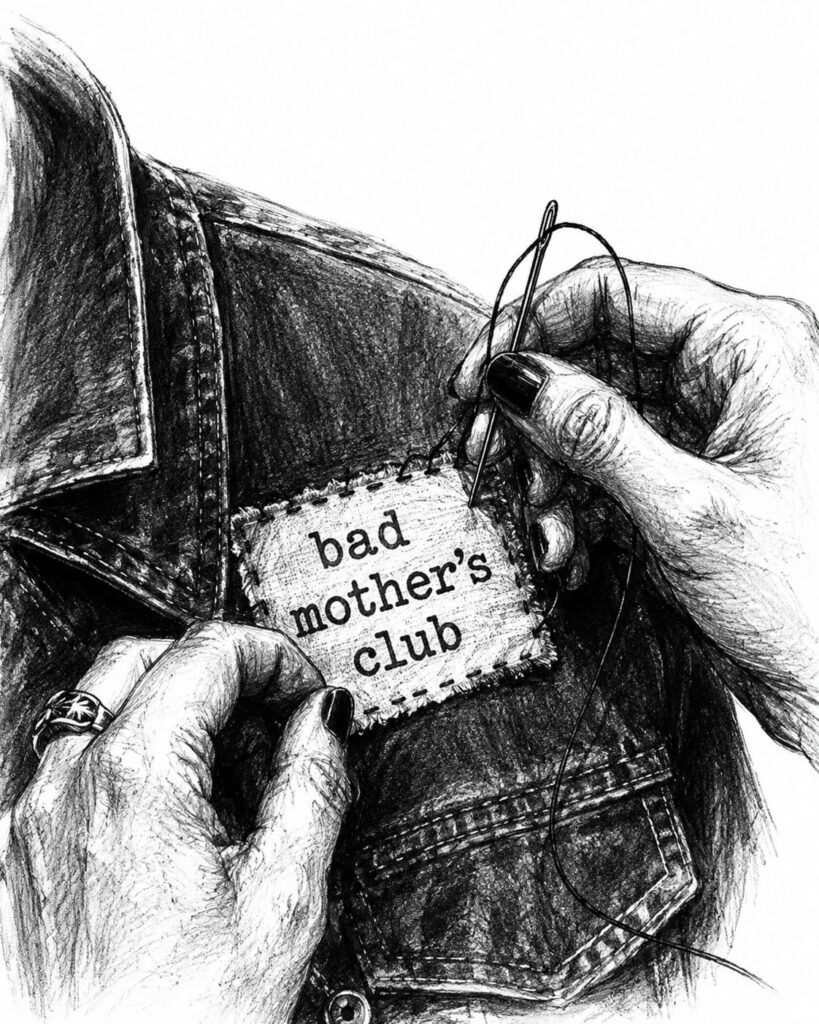
The bad mother’s club is not a real club. Nobody applies. Nobody wants the membership.
You arrive there when you stop being able to perform optimism. When you stop translating harm into “challenges.” When you stop believing the next meeting will fix what the last ten meetings did not. When you realise that your child’s distress is not a public relations problem to be managed but information to be trusted.
You arrive there when you understand that being seen as cooperative is not the same as being protective.
At first, it can feel like failure. You may grieve the parent you tried to be: calm, gracious, collaborative, liked. You may grieve the school relationship you hoped was possible. You may grieve the years spent trying to make the system understand what your child’s body had been saying from the beginning.
But then you find other parents.
Parents who know the after-school collapse. Parents who have sat in cars after meetings, shaking. Parents who have sent the careful email and the less careful one. Parents who have watched their child disappear inside words like behaviour, regulation, safety, and support. Parents who have been called difficult for saying true things too clearly.
They are not shocked by your story. They do not need you to make it smaller. They do not need you to perform balance before they will believe you.
They say: yes, that happened to us too.
That is the club.
Not a verdict. An invitation.
Welcome
If you are becoming the bad mother, let yourself understand what that may actually mean.
It may mean you are no longer willing to trade your child’s wellbeing for institutional comfort.
It may mean you are no longer willing to confuse access with attendance, paperwork with support, or politeness with safety.
It may mean you have stopped helping the system explain away what your child is living through.
It may mean you are finally trusting the evidence in front of you: your child’s body, your own observations, the pattern across time, the gap between what the school says is happening and what is happening at home.
That does not make you unreasonable.
It makes you awake.
The good mother, as defined by the institution, keeps the fiction alive.
The bad mother tells the truth.
Welcome to the bad mother’s club. There are more of us here than you think.